

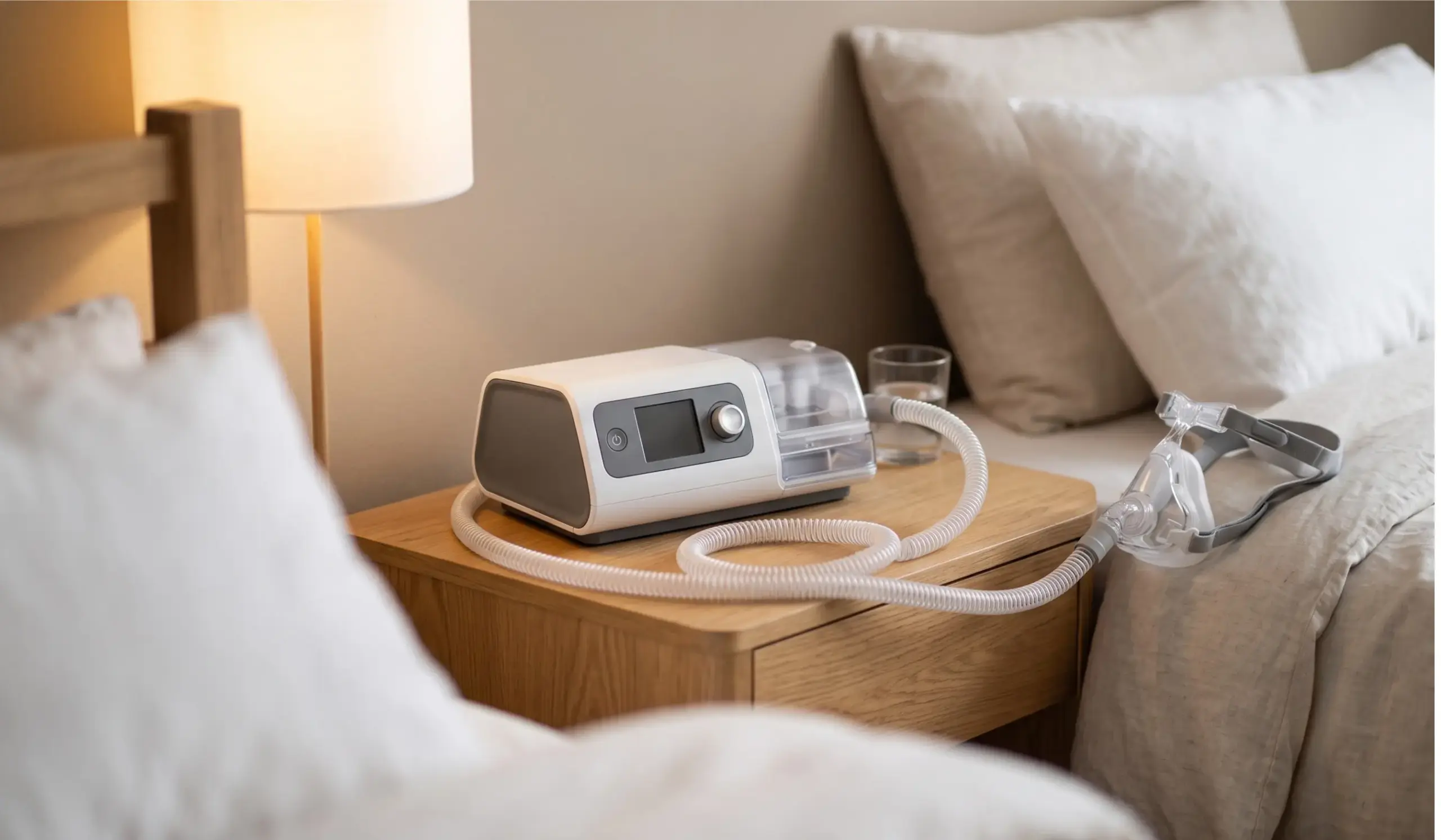
Wenn Sie oder ein Ihnen nahestehender Mensch mit folgenden Problemen zu kämpfen hat Schlafapnoe, COPD oder Atembeschwerdenhaben Sie vielleicht schon einmal von der BiPAP-Gerät. Obwohl es einem CPAP ähnelt, funktioniert es anders und kann bei bestimmten Erkrankungen lebensverändernd sein.
In this guide, we'll explain what a BiPAP machine is, how it differs from CPAP, its uses, benefits, UK pricing, and answer the most common questions people ask before starting BiPAP therapy.
BiPAP-Gerät erklärt
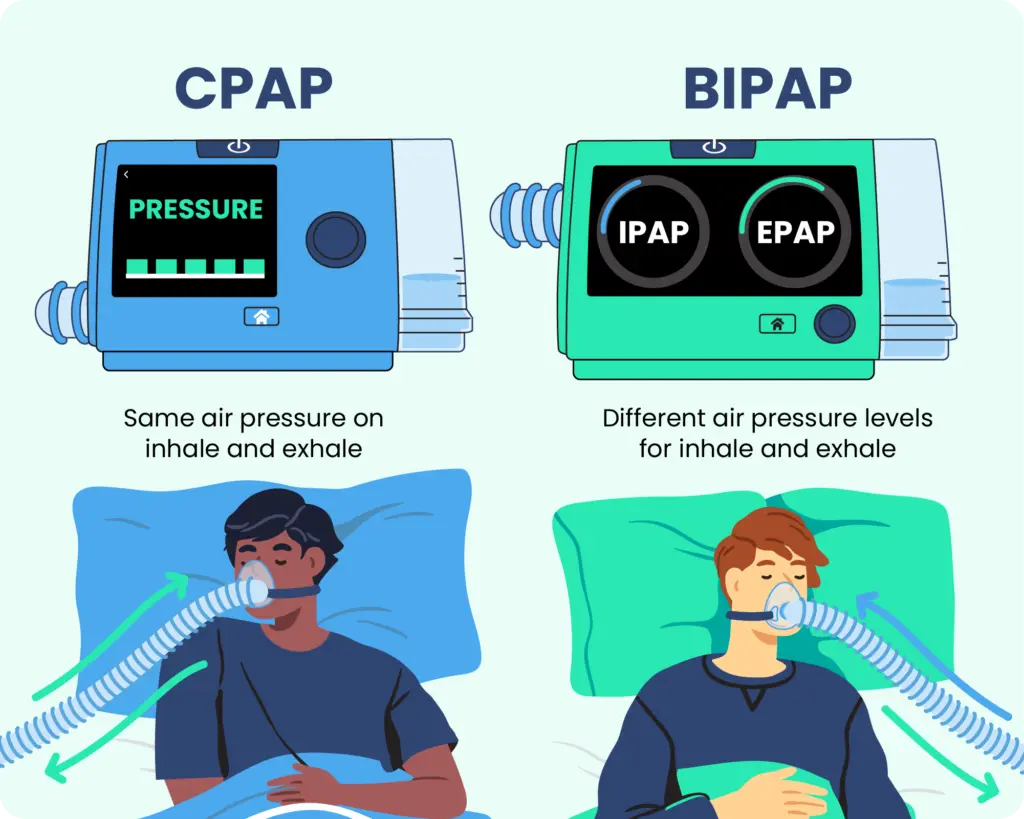
Im Gegensatz zu CPAP, das einen konstanten Druck liefert, ist ein BiPAP-Gerät passt den Luftstrom an based on whether you're inhaling or exhaling.
- Inhalationsunterstützung (IPAP): Hilft, Luft in die Lunge zu drücken.
- Ausatemerleichterung (EPAP): Verringert den Druck beim Ausatmen und macht es angenehmer.
- Integration der Sauerstofftherapie: Einige BiPAP-Beatmungsgeräte können mit Sauerstoffkonzentratoren für Patienten mit niedrigem Sauerstoffgehalt kombiniert werden.
This makes BiPAP especially useful for patients with weaker lung function or more complex breathing needs.
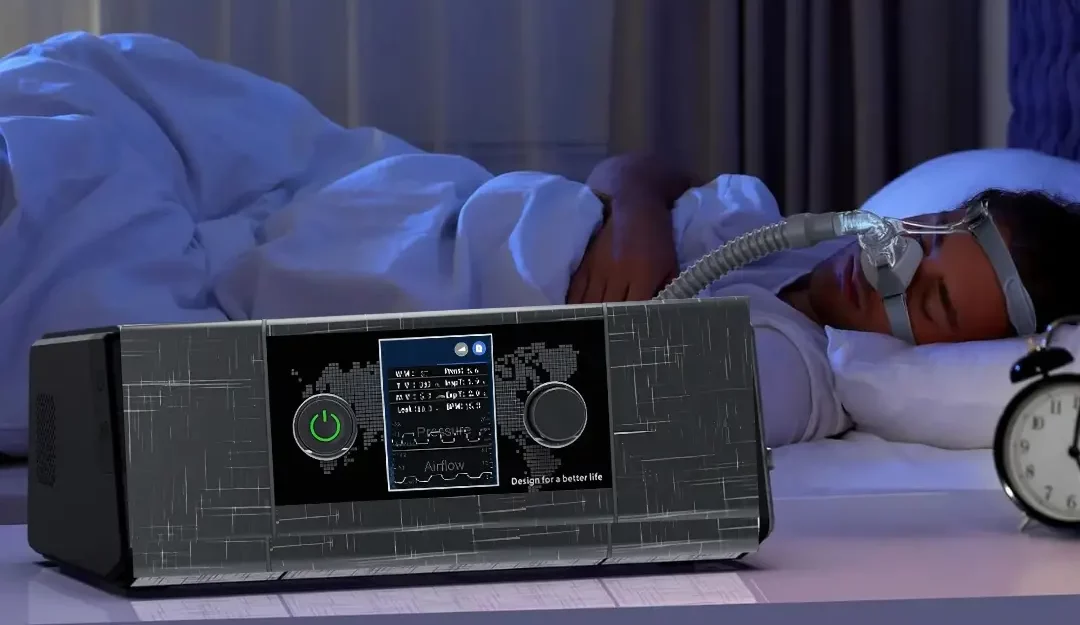
Looking for advanced home therapy?
Shop BiPAP & CPAP Machines UKWhat Exactly Does a BiPAP Do?
A BiPAP machine supports breathing by delivering two different air pressures through a mask: a higher pressure as you breathe in, and a lower pressure as you breathe out. This reduces the effort needed to exhale, which is why BiPAP is often used for people who find a single fixed CPAP pressure uncomfortable or insufficient.
BiPAP vs. CPAP: What's the Difference?
Beide Geräte unterstützen die Atmung, aber ihre Mechanismen unterscheiden sich:
- CPAP-Maschine: Delivers continuous air pressure, the same level for inhale and exhale.
- BiPAP-Maschine: Offers two pressure levels, higher for inhale, lower for exhale.
Wann BiPAP gegenüber CPAP vorzuziehen ist:
- For patients with COPD, heart failure, or central sleep apnea.
- When CPAP is too uncomfortable due to high exhalation pressure.
- In hospital settings, BiPAP may also serve as a non-invasive ventilator for acute breathing failure.
If you're unsure whether CPAP or BiPAP is right for you, see our full comparison guide: CPAP vs. BiPAP: Wann man sie bei Schlafapnoe einsetzt.
How Long Can a Person Stay on a BiPAP Machine?
Most people use BiPAP long-term, every night, for as long as their underlying condition requires it, similar to CPAP. There's no fixed limit on how long someone can use it. In hospital settings, BiPAP may be used continuously for shorter periods during an acute breathing episode, then withdrawn once the person is more stable.
Is Being Put on a BiPAP Serious?
Being started on BiPAP for a chronic condition like sleep apnea or COPD is not typically an emergency, it's a planned therapy decided with your doctor. Being placed on BiPAP in a hospital setting for acute breathing difficulty is more serious, as it usually means your provider is closely supporting your breathing while treating the underlying cause.
Ready to explore BiPAP therapy at home?
Shop BiPAP Machines UKVorteile der Verwendung eines BiPAP-Geräts
- Leichteres Atmen: Verringert die Anstrengung, die zum Ausatmen erforderlich ist.
- Besserer Sauerstoffgehalt: Verbessert den Luftstrom für Patienten mit Lungen- oder Herzerkrankungen.
- Linderung der Symptome von Schlafapnoe: Verhindert Atemaussetzer und verbessert die Schlafqualität.
- Unterstützt die Gesundheit des Herzens: Reduziert die Belastung des Herz-Kreislauf-Systems.
- Flexibilität: Can be combined with oxygen therapy for advanced care.
FAQs über BiPAP-Maschinen
Wofür wird ein BiPAP-Gerät verwendet?
A BiPAP machine is used to treat sleep apnea, COPD, heart failure, and other breathing disorders. It provides breathing support for patients who struggle with CPAP.
Gilt ein BiPAP als lebenserhaltende Maßnahme?
In some cases, yes. While not the same as full mechanical ventilation, a BiPAP can act as a non-invasive ventilator in hospitals or at home to support breathing.
Warum sollten Sie BiPAP anstelle von CPAP verwenden?
BiPAP is used instead of CPAP when patients need different pressures for inhale and exhale, or cannot tolerate continuous CPAP pressure. It's especially useful for COPD and heart failure patients.
Was sind die Vorteile des Schlafens mit einem BiPAP-Gerät?
BiPAP improves sleep quality and oxygen levels, and reduces snoring and apnea episodes. Patients often wake up more energized, with better heart and lung function.
Wie hilft BiPAP bei Herzinsuffizienz?
BiPAP reduces the effort required to breathe, improves oxygen delivery, and lowers the workload on the heart, which is beneficial for patients with heart failure.
Verwenden COPD-Patienten BiPAP?
Yes. BiPAP is widely prescribed for COPD patients, as it helps ease breathing, reduce carbon dioxide buildup, and improve oxygen intake.
Erhöht BiPAP den Blutdruck?
No. In fact, BiPAP often helps reduce blood pressure in sleep apnea patients by improving oxygenation and reducing strain on the cardiovascular system.
For NHS guidance on breathing support and sleep apnea treatment, see the NHS overview of sleep apnoea.
A BiPAP ventilator provides advanced breathing support by offering two pressure levels, making it ideal for patients with sleep apnea, COPD, and heart conditions. Unlike CPAP, BiPAP is easier to exhale against, improving comfort and oxygenation.
Explore Broxtal's full range of BiPAP and CPAP machines.
Shop Sleep Therapy UK