

Quick answer: get the size right first, start with 15-30 minutes a day, and build up from there. Don't wear it all day straight out of the box. That's really the whole guide in one sentence, but if you want to actually get it right, the details below cover sizing, how to put each style on, how long to wear it, and the mistakes that make people give up on a perfectly good posture corrector in the first week.
Haven't picked a Posture Corrector yet?
Shop Posture CorrectorsHow to Size a Posture Corrector Correctly
Sizing is where most people go wrong, and it's worth getting right before you even think about how long to wear it. Belt-style correctors are sized by your waist measurement, brace-style ones are usually sized by height. A corrector that's too small will dig in, and one that's too big won't give you any real support, so this isn't a step to skip or guess at.
| Style | Sized by | How to measure |
|---|---|---|
| Belt-style, e.g. the Tcare™-riem voor een betere rughouding | Waist circumference (6 sizes, S to 3XL) | Measure around your belly with a tape measure; size down for a snugger fit |
| Brace-style, e.g. the Houdingscorrector voor mensen met een bochel | Height (S, M, L) | S up to 160cm, M 160-175cm, L above 175cm, then fine-tune with the adjustable straps |
Sizing and measurement guidance sourced directly from each product's own listing on broxtal.com, checked and current as of August 2026. Always confirm against the size chart on the specific product page before ordering, since ranges can be refined between batches.
How to Put On a Posture Corrector: Step by Step
The exact steps depend on which style you've got, but here's how the two most common designs at Broxtal actually go on.
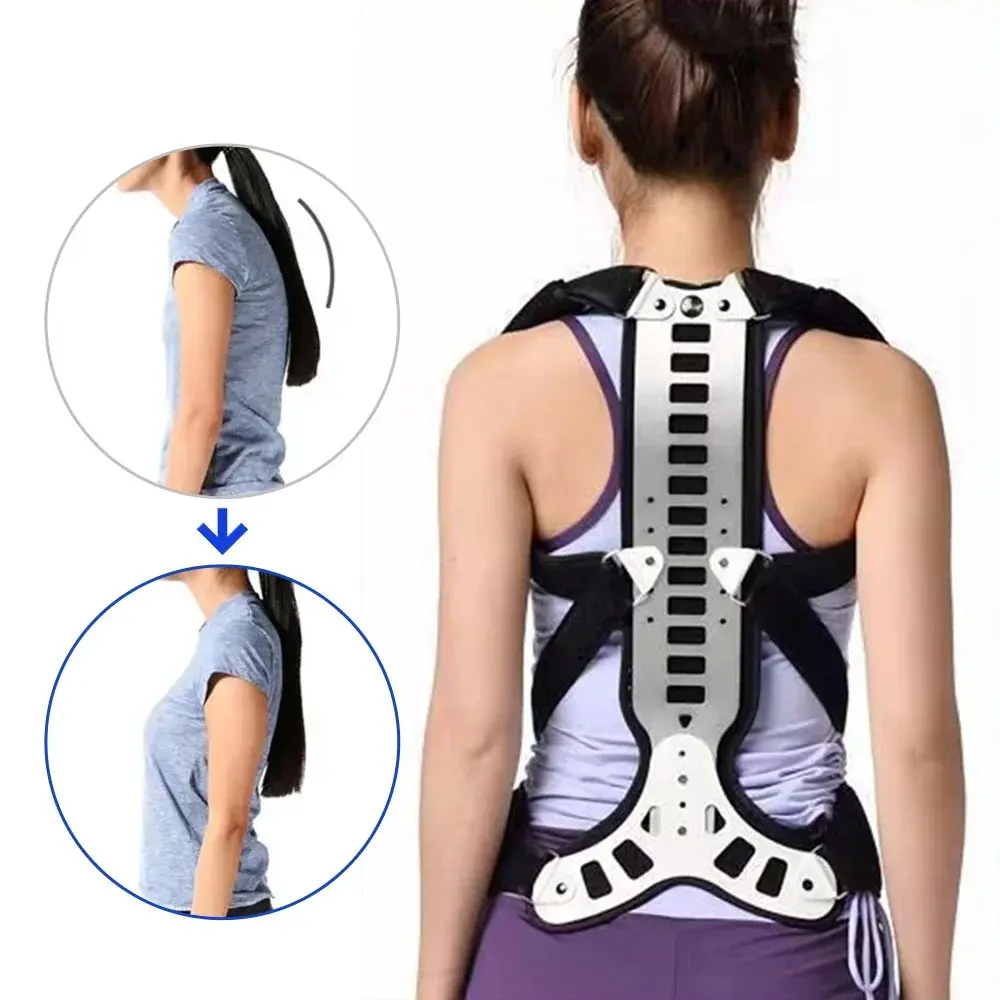
Brace-style (figure-8 straps): Slip both arms through the loops the way you'd put on a backpack, so the straps sit over your shoulders. Pull them down and fasten the waistband snugly, not tightly. Even out the tension on each shoulder strap until your shoulders draw back gently and your chest opens up a bit. If you can't breathe normally or move your arms freely, it's too tight, loosen it.

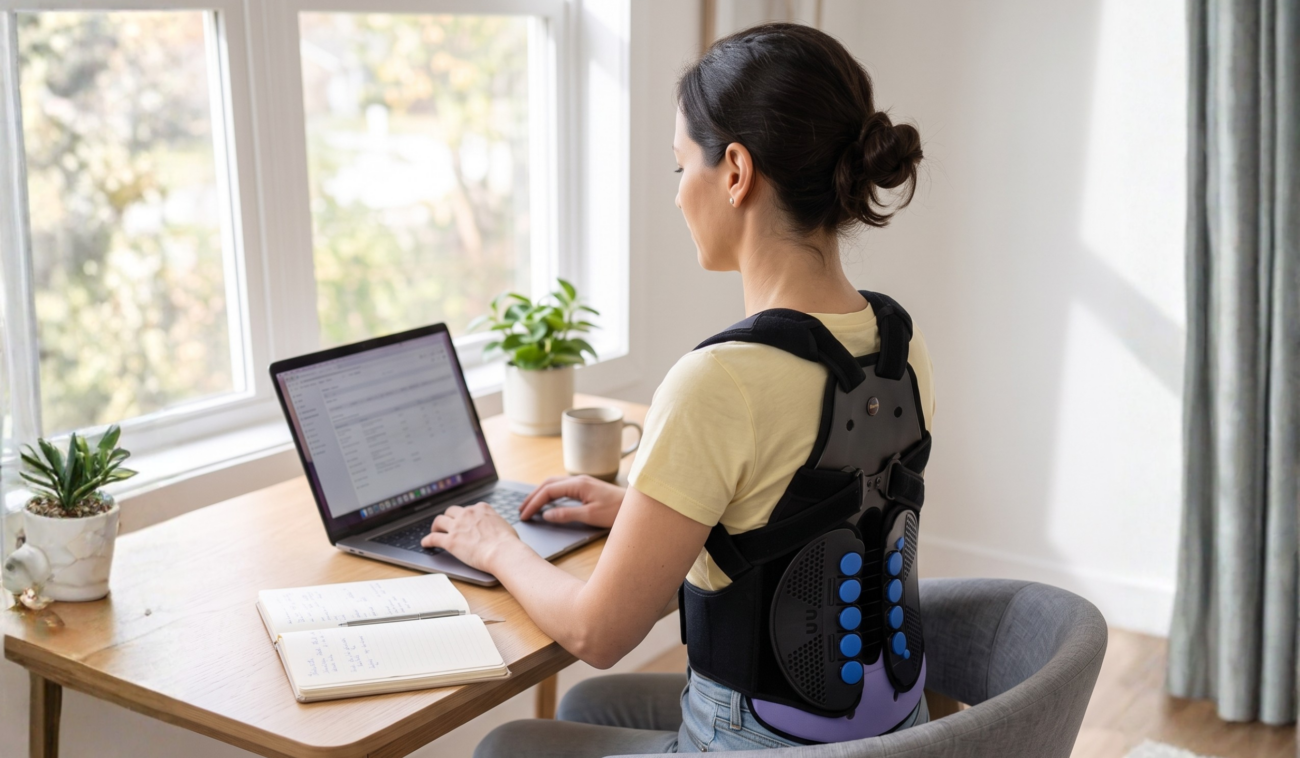
Belt-style (pulley system): Wrap the belt around your torso and fasten the waistband first, that's your anchor point. Then use the finger pull rings to tighten the pulley straps evenly on both sides, one pull at a time, until you feel light support across your upper back rather than a hard clamp. Lock the quick-release buckles once it feels right. It sits low-profile enough to wear under a shirt without anyone noticing.
See both styles side by side and pick the one that suits your build.
De beste houdingscorrectoren in het Verenigd Koninkrijk 2026Start With 15-20 Minutes a Day
Don't wear a new corrector for hours on day one, your body needs time to get used to it. The manufacturer guidance for the Hunchback Posture Corrector Brace is specific on this: start with 15-30 minutes and let your body adjust before extending the session. That's sound advice regardless of which style you buy, since it gives your own postural muscles a chance to adapt instead of leaning entirely on the brace from the first day.
Worth flagging honestly: guidance varies by brand, and not all of it is equally cautious. The Tcare belt's own product listing recommends a minimum of 4-6 hours daily over 8 weeks for its stated body-shaping effect. I'd treat that as a brand's aspirational claim for its own product rather than a general rule to follow, I haven't seen independent clinical evidence backing that specific timeline, and it's a much longer daily commitment than most physios would suggest for a new user. Starting shorter and working up based on how your body actually responds is the safer approach whichever corrector you choose.
Increasing Wear Time Gradually
Once the first week feels comfortable, build up in stages rather than jumping straight to hours at a time.
| Period | Suggested daily wear |
|---|---|
| Week 1 | 15-30 minutes, once or twice a day |
| Week 2-3 | 30-60 minutes, building tolerance |
| Week 4 onward | Up to 1-2 hours daily, or as advised by a physio, only if it stays comfortable |
This progression is drawn from the manufacturer guidance published for the Hunchback Posture Corrector Brace. If you have an existing back, shoulder or nerve condition, check with a GP or physio before extending wear time beyond that.
When Should You Wear a Posture Corrector?
It's most useful during the parts of your day when slouching happens without you noticing, long stretches at a desk, driving, or scrolling on your phone. It's not really built for exercise or strenuous activity, that's when you want your own postural muscles doing the work, not a brace doing it for you. And take it off before bed; it's a daytime awareness tool, not something to sleep in.
Results Timeline: What to Expect and When
I'll be straight with you here rather than promise something we can't back up. As we covered in our evidence review of whether posture correctors actually work, the research available mostly measures immediate, short-term effects during a single session, not outcomes tracked over weeks or months. So in practice, most people notice better posture awareness within the first few sessions, simply because the brace physically nudges you when you slouch. Whether that carries over into how you sit and stand once the corrector is off is a slower, less certain process, and it depends far more on pairing it with your own strengthening exercises than on the corrector doing the work alone. Anyone promising a fixed number of weeks to "fix" your posture is overstating what the current evidence supports.
Common Mistakes to Avoid
Most people who give up on a posture corrector after a week aren't dealing with a bad product, they're making one of these mistakes.
- Buying the wrong size. A belt that's too small or a brace sized for the wrong height will either dig in or fail to give any real support, no amount of adjusting the straps fixes a size that's genuinely wrong.
- Wearing it too tight. Tighter doesn't mean more effective, it just restricts breathing and circulation and makes you want to rip it off within the hour.
- Going straight to all-day wear. Jumping to several hours on day one, before your body has adjusted, is probably the single biggest reason people quit in the first week.
- Wearing it during exercise or sleep. It's built for supported daytime sessions, not for workouts or overnight use, your muscles need to move freely during exercise.
- Expecting it to work on its own. A corrector is most useful as a physical reminder alongside actual posture exercises, not a substitute for them.
Veelgestelde vragen
How tight should a posture corrector be?
Snug enough to gently draw your shoulders back, but never so tight that it restricts breathing, digs into your skin, or leaves marks after removal. If it hurts, it's too tight, loosen it.
How many hours a day should I wear a posture corrector?
Start with 15-30 minutes and build up gradually. Manufacturer guidance points to around 1-2 hours daily as a reasonable target once your body has adjusted, not wearing it all day from the start.
Can I wear a posture corrector under my clothes?
Yes, both belt-style and brace-style correctors are designed to sit discreetly under everyday clothing for daytime wear.
Can I sleep in a posture corrector?
No, it's designed as a daytime support and awareness tool, not sleepwear. Take it off before bed.
How do I know if my posture corrector fits properly?
Check the size chart against your waist measurement for belt-style, or your height for brace-style, before buying, then fine-tune with the adjustable straps once it's on. It should feel supportive, not restrictive, and shouldn't leave marks after you take it off.
The NHS's own back pain guidance doesn't mention posture correctors specifically, its core advice is to stay active and keep moving. For general context on back health, see the NHS back pain guidance.
Ready to find the right fit for your posture routine?
Shop Posture Correctors