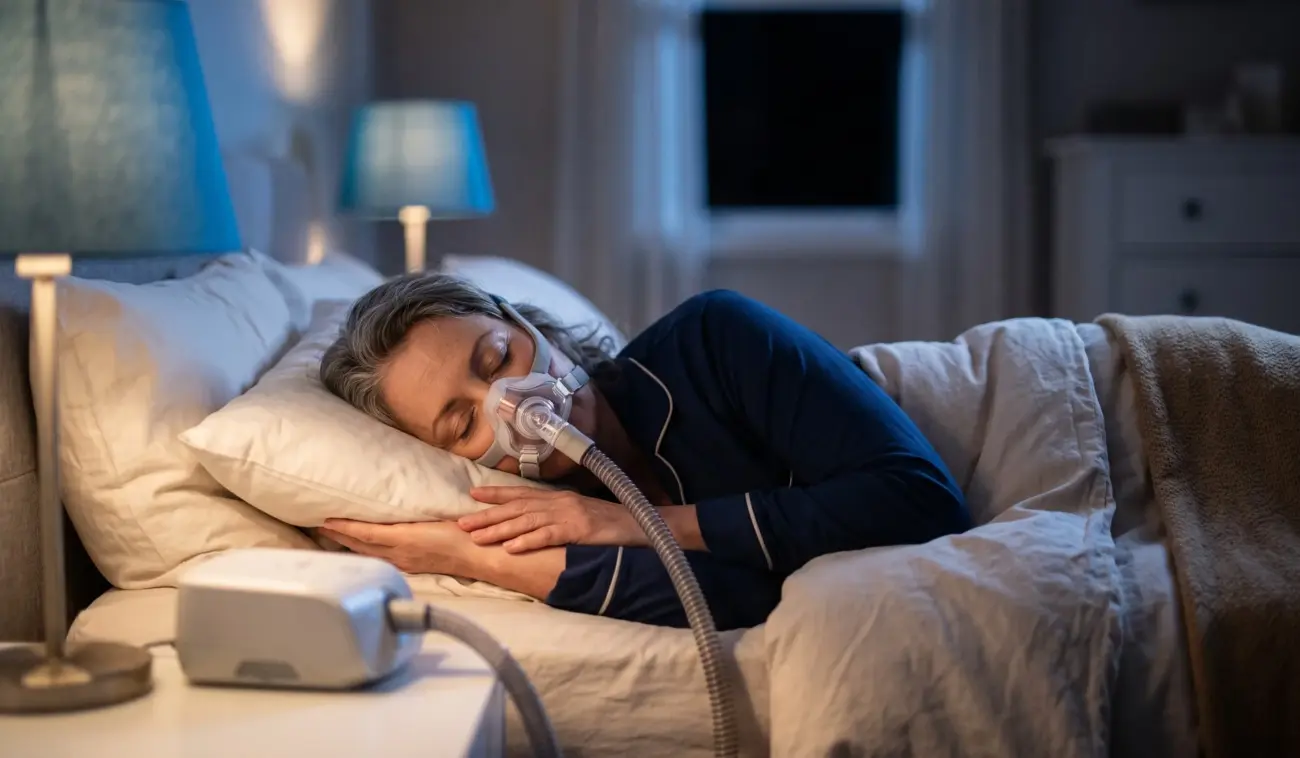

Most people with sleep apnea need CPAP, not BiPAP. CPAP is the first-line treatment for mild to moderate obstructive sleep apnea, while BiPAP is generally reserved for severe cases, coexisting lung conditions, or when someone genuinely cannot tolerate a single fixed CPAP pressure. If you have not yet been diagnosed, the honest answer is that a sleep study, not a guess, is what determines which one you need.
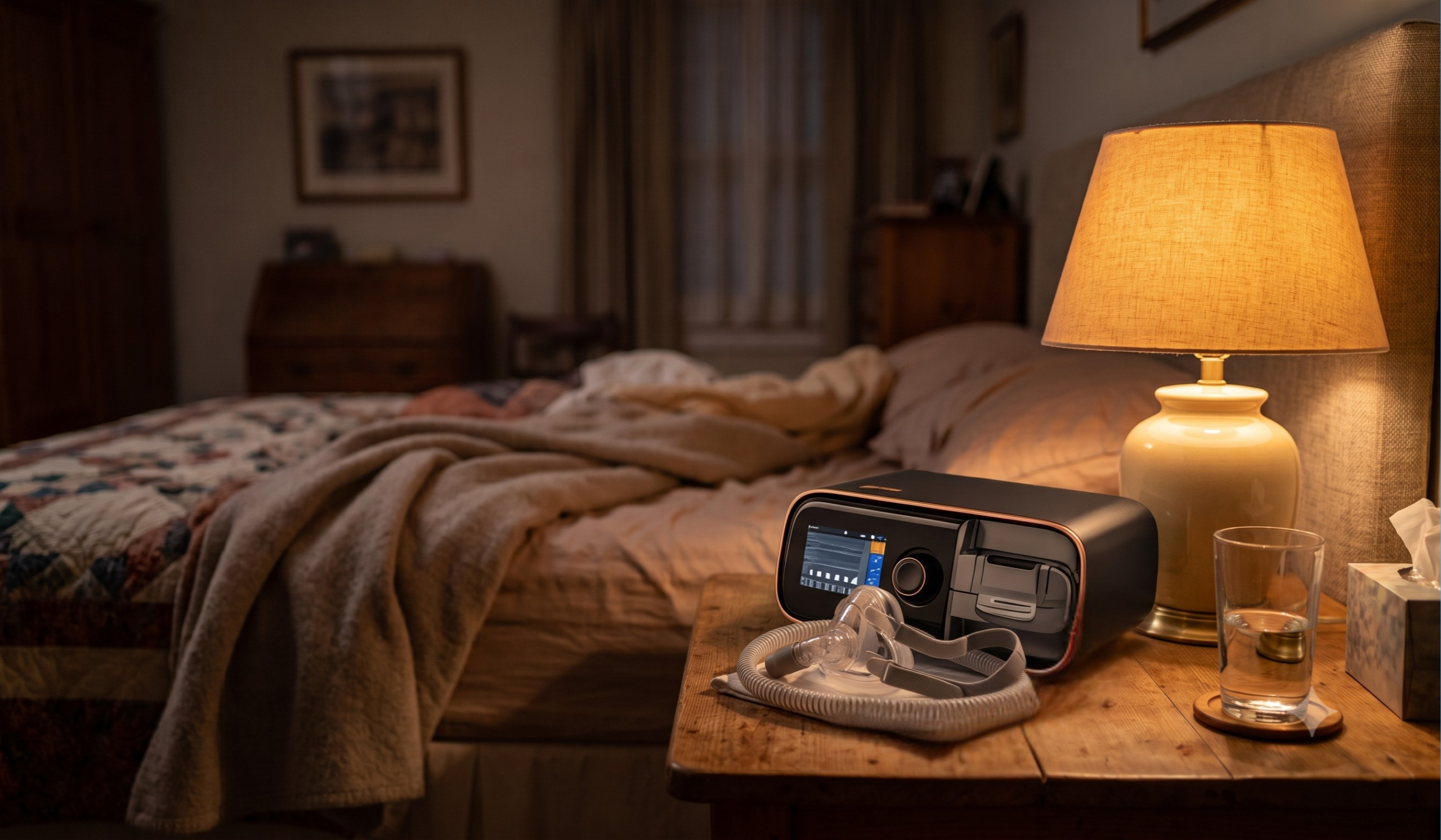
CPAP vs BiPAP: The Difference in Plain Terms
Both machines treat obstructive sleep apnea by keeping your airway open while you sleep. The difference is how they deliver air pressure, and that difference is what decides who suits which device.
| Funktion | CPAP | BiPAP |
|---|---|---|
| Pressure delivery | One constant pressure, all night | Two levels: higher on inhale, lower on exhale |
| Typically used for | Mild to moderate obstructive sleep apnea | Severe apnea, coexisting lung conditions, hard-to-tolerate CPAP pressure |
| Comfort on exhale | Can feel like breathing against resistance | Pressure drops on exhale, generally easier to breathe out |
| Prescription needed to buy | No | No |
CPAP holds one pressure all night. BiPAP steps down on every exhale, which is what makes it easier to breathe out against.
Who Is CPAP For?
CPAP (kontinuerligt positivt luftvägstryck) delivers one steady pressure all night. It's the treatment most people start with, and for mild to moderate obstructive sleep apnea, it's usually all that's needed to stop the airway collapsing during sleep. If you've been told you have mild or moderate OSA, or you're newly diagnosed and haven't yet trialled a pressure setting, CPAP is the standard starting point, not BiPAP. Most people tolerate a fixed CPAP pressure well once they're used to the mask. If a fixed setting genuinely feels too strong at times and too weak at others, an auto-adjusting APAP machine is usually the next step to discuss, before BiPAP.
Who Is BiPAP For?
BiPAP (Bilevel Positive Airway Pressure) delivers two pressures instead of one: a higher pressure on the inhale, a lower pressure on the exhale. That drop on exhale is what makes BiPAP easier to breathe out against, which is why it tends to come up for people who find a fixed CPAP pressure uncomfortable to exhale against, or whose apnea is severe enough to need higher pressure than CPAP alone comfortably delivers. BiPAP is also used more broadly for conditions like COPD, where support on both the inhale and exhale helps with breathing, not just for sleep apnea specifically. For a full side-by-side comparison, see our guide CPAP kontra BiPAP: När ska man använda dem vid sömnapné?.
Ready to browse certified sleep therapy machines?
Shop CPAP & BiPAP MachinesWhen Is BiPAP Preferred Over CPAP?
BiPAP tends to be the better fit in a specific set of situations, rather than as a general upgrade from CPAP:
- Severe obstructive sleep apnea where a single CPAP pressure isn't enough to keep the airway open comfortably
- Difficulty exhaling against a fixed CPAP pressure, sometimes described as feeling like you're "fighting the machine" to breathe out
- Coexisting conditions such as COPD, where the two-pressure format supports breathing out as well as in
- Central sleep apnea or CO2 retention concerns, where some BiPAP machines include a timed backup mode
None of these are things you can reliably judge from home. They're determined by a sleep clinician looking at your sleep study results, not by symptoms alone.
When Is BiPAP Not the Right Choice?
BiPAP isn't automatically "stronger" or "better" than CPAP, and it isn't recommended by default. If your sleep apnea is mild to moderate and a fixed pressure works fine for you, BiPAP adds cost and complexity without adding benefit. CPAP remains the standard first-line treatment for most people with obstructive sleep apnea, and switching to BiPAP without a clinical reason isn't something we'd recommend. If your pressure needs simply vary rather than being consistently high, an auto-adjusting APAP machine may suit you better than either, our guide APAP-maskiner förklarade: APAP jämfört med CPAP covers that comparison in detail.
Signs Worth Mentioning to Your GP
None of these tell you which machine you need on their own, but they're useful to bring up when you speak to a GP or sleep clinic, since they help shape whether CPAP is likely to be enough or whether BiPAP is worth discussing:
- Loud, frequent snoring with pauses in breathing noticed by a partner
- Waking up gasping or choking during the night
- Morning headaches or a dry mouth on waking
- Excessive daytime sleepiness despite a full night in bed
- A diagnosed lung condition such as COPD alongside suspected sleep apnea
If several of these apply, it's worth raising sleep apnea with your GP directly rather than waiting to see if it improves on its own, untreated OSA is linked to raised blood pressure, heart disease, and stroke risk over time.
Getting Diagnosed in the UK
On the NHS, a suspected sleep apnea diagnosis usually starts with a home sleep study, most commonly overnight pulse oximetry or a home cardiorespiratory polygraphy test, rather than an in-person hospital stay. Severity is scored using the apnoea-hypopnoea index (AHI): mild is roughly 5 to 14 events per hour, moderate around 15 to 30, and severe is above that. CPAP is the NHS's standard first-line treatment for moderate to severe obstructive sleep apnea, and it's provided free if your clinician prescribes it. BiPAP is considered separately, usually where CPAP alone isn't sufficient or tolerated, or where a coexisting respiratory condition is involved. For the full NHS overview, see the NHS page on sleep apnoea.
NHS waiting times for a sleep clinic referral vary by trust, which is why many people choose to buy a certified CPAP or BiPAP machine privately once they have a diagnosis or a clear sense of which pressure format they need, rather than waiting on equipment provision. If you're weighing that option, our guide on buying a CPAP machine in the UK without the NHS walks through the prescription question and what to expect.
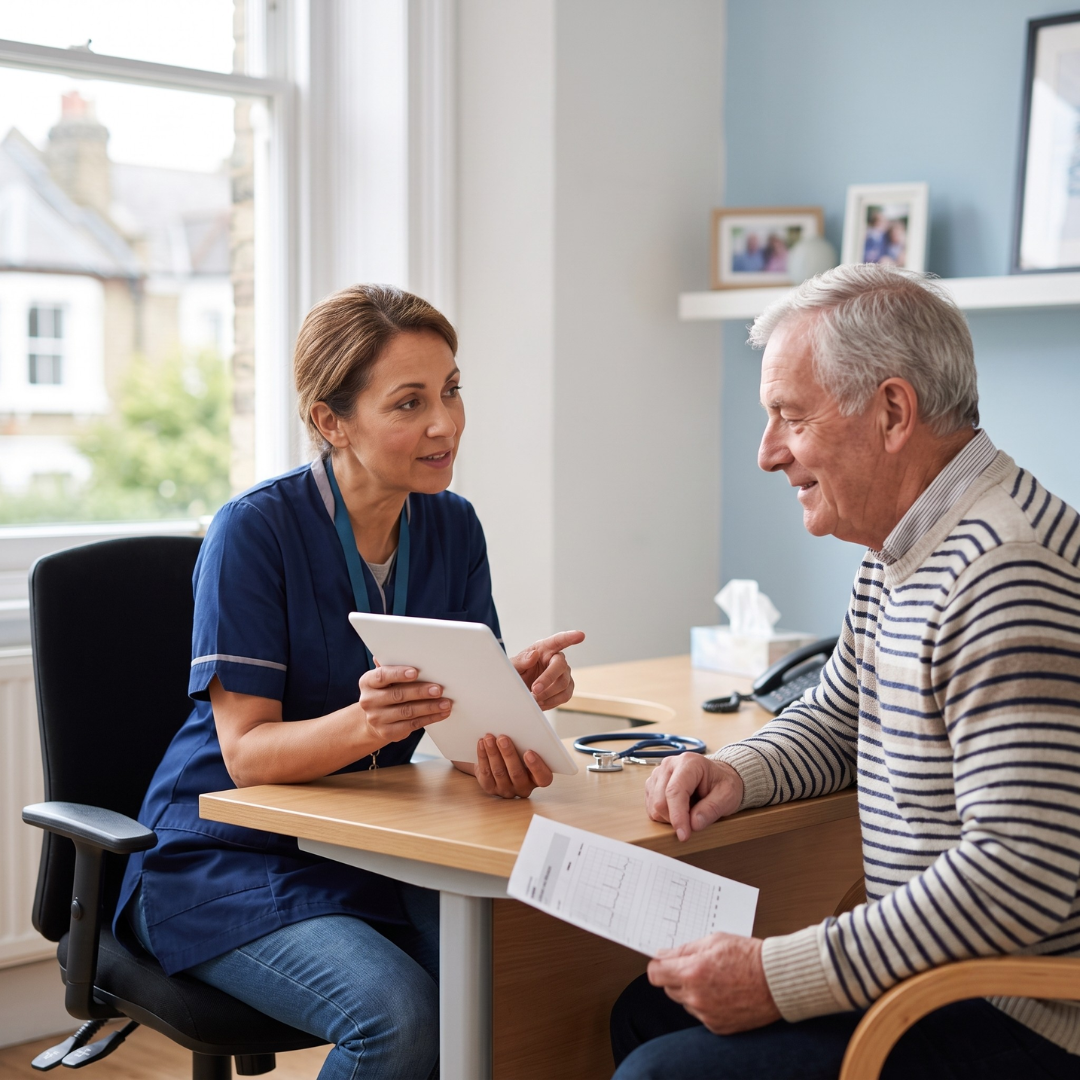
A confirmed diagnosis, not guesswork, is what should decide between CPAP and BiPAP. Once you know your AHI severity and how you responded to a trial pressure, the choice is usually straightforward.
Curious what CPAP or BiPAP actually costs in the UK?
See CPAP Machine Cost UKVanliga frågor
How do I know if I need CPAP or BiPAP?
You need a sleep study to know for certain. CPAP suits most people with mild to moderate obstructive sleep apnea, while BiPAP is generally reserved for severe cases, coexisting lung conditions, or when a fixed CPAP pressure is hard to exhale against.
Can I just choose BiPAP instead of CPAP if I think it will be more comfortable?
You can buy either without a prescription, but BiPAP isn't automatically more comfortable or more effective for mild to moderate apnea. It's generally recommended based on severity or a coexisting condition, not personal preference alone.
What if CPAP pressure feels too hard to breathe out against?
This is one of the main reasons clinicians move someone from CPAP to BiPAP. If you're struggling to exhale against your current pressure, it's worth raising with your clinician rather than switching machines on your own.
Is BiPAP only used for sleep apnea?
No. BiPAP is also used for conditions like COPD and other breathing difficulties where support on both the inhale and exhale is needed, not just for sleep apnea.
Do I need a prescription to buy a CPAP or BiPAP machine in the UK?
No, Broxtal's CPAP and BiPAP machines can be bought directly without a prescription. Confirming your diagnosis and pressure needs with a doctor or sleep clinic first is still recommended, especially before choosing BiPAP.
Still not sure which one fits your situation?
Contact Broxtal for Guidance