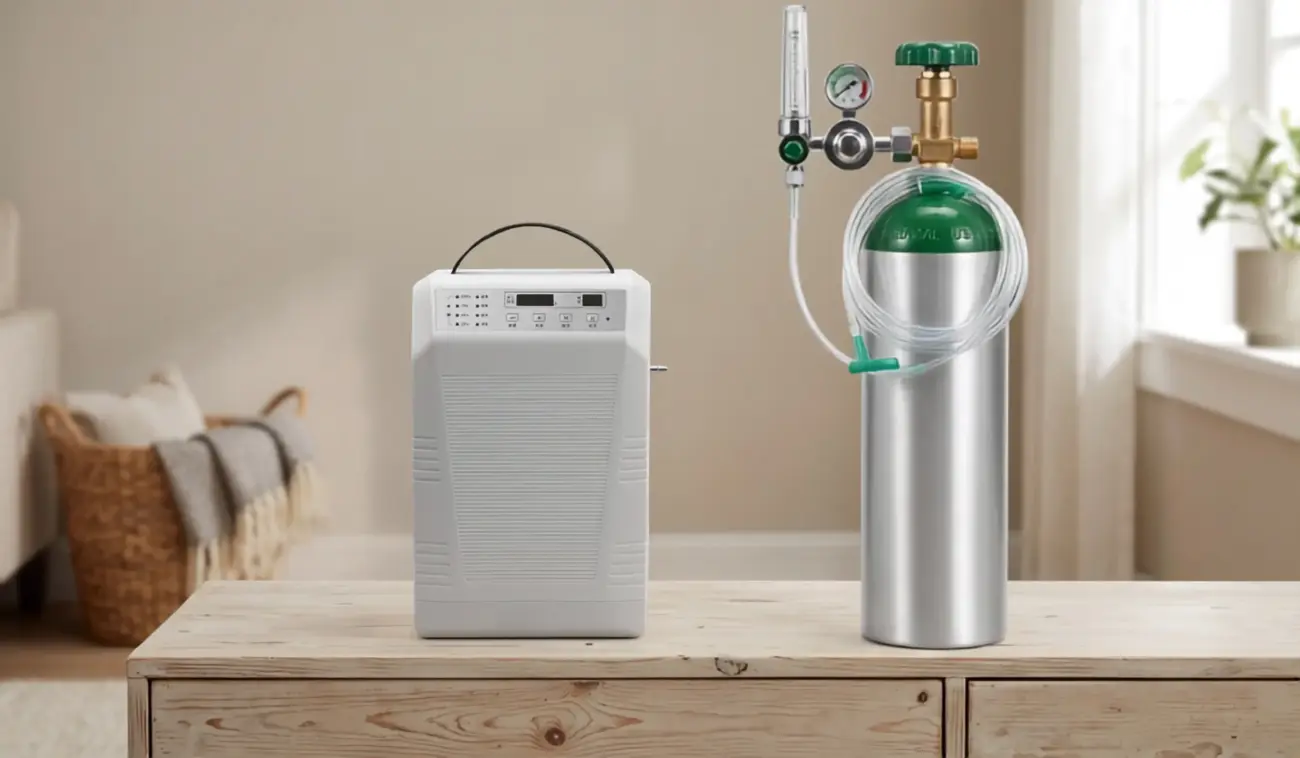

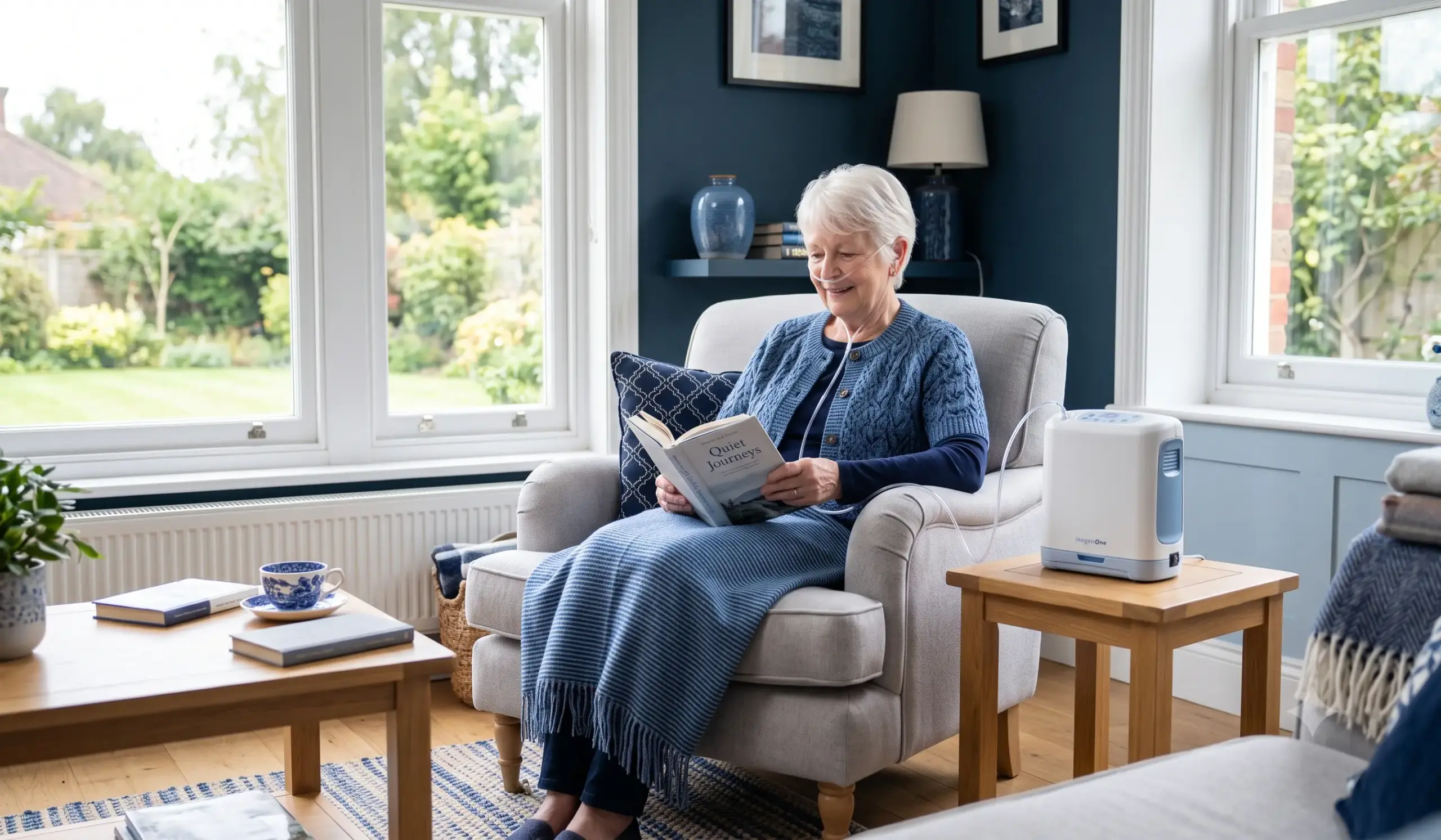
Yes, the NHS provides home oxygen concentrators, but only after a specialist assessment confirms you meet the clinical criteria, and only for people with a genuine medical need for supplemental oxygen. Your GP can't prescribe it directly; they refer you to a home oxygen assessment service. If you don't meet the criteria, or you'd rather not wait for assessment and referral, buying a concentrator privately is a legal, prescription-free alternative.
Which Conditions Qualify for NHS Home Oxygen?
NHS home oxygen therapy is prescribed for people with genuinely low blood oxygen levels (hypoxaemia), not simply breathlessness. The most common underlying conditions include:
- Chronic Obstructive Pulmonary Disease (COPD), by far the most common reason for a home oxygen referral
- Interstitial lung disease, including pulmonary fibrosis
- Severe chronic asthma or other advanced lung disease
- Chronic heart failure with associated low oxygen levels
- Pulmonary hypertension
Clinically, most services use a resting oxygen saturation below 92% on air as the trigger for a long-term oxygen therapy assessment, though the exact threshold and process can vary slightly between NHS trusts. You'll also usually need to be clinically stable, meaning no chest infection or flare-up, for around 8 weeks before assessment, since an exacerbation can temporarily and misleadingly lower your reading.
A separate category, ambulatory oxygen, is assessed differently: it's for people whose oxygen level is fine at rest but drops when they move around, walk, or exert themselves.
If smoking is a factor, most services will ask you to stop, or will carry out a careful fire-safety risk assessment first. This isn't the NHS being difficult, concentrated oxygen is a serious fire accelerant, and it's a safety step Broxtal recommends for private buyers too.
How Does the NHS Referral and Assessment Process Work?
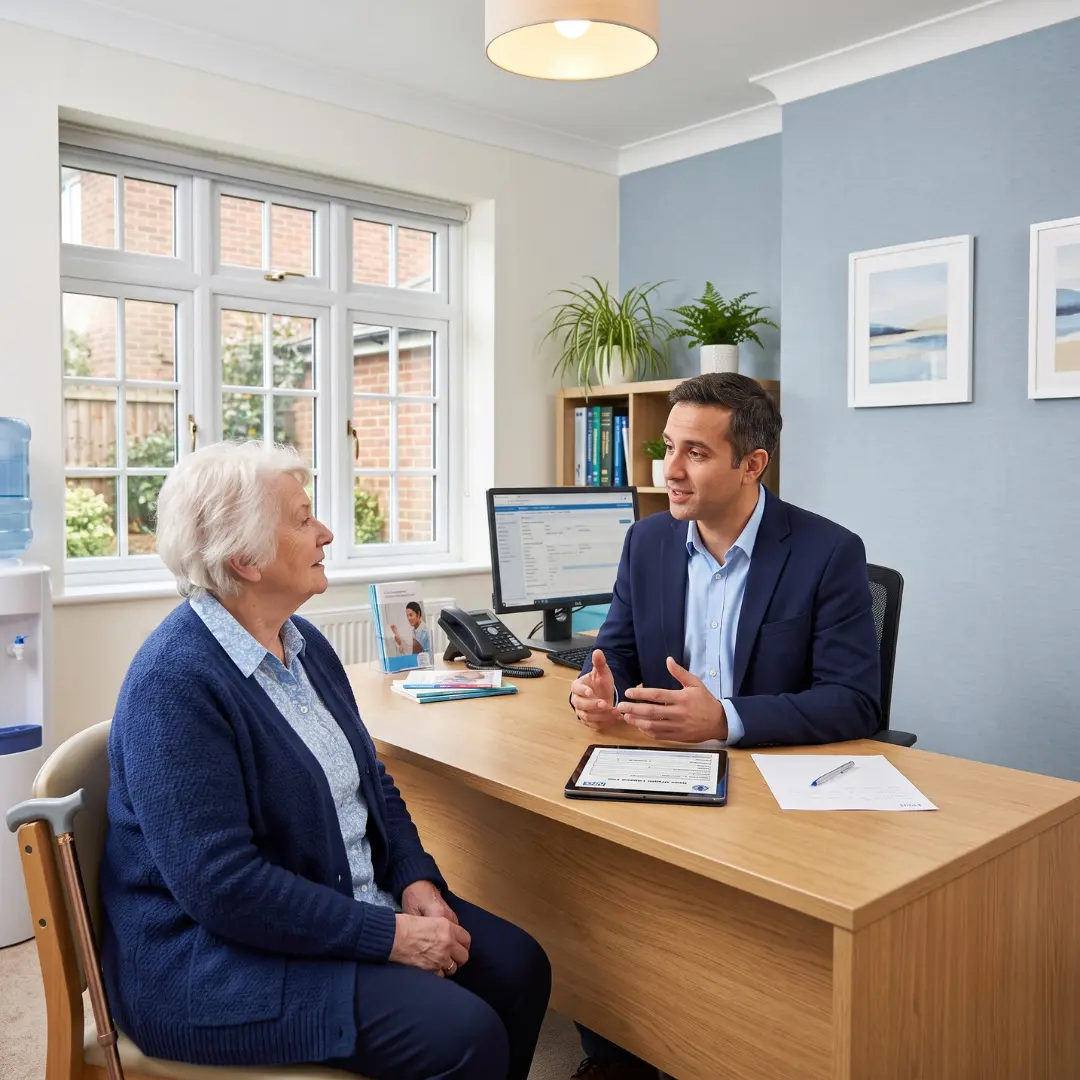
Your GP is the starting point, but they're not the one who decides you need oxygen or prescribes it. If your symptoms and history suggest you might benefit, your GP refers you to a specialist respiratory team or your local Home Oxygen Assessment and Review (HOS-AR) service. From there, the process typically looks like this:
- Specialist assessment: a respiratory nurse, physiotherapist, or doctor measures your oxygen levels at rest, and sometimes on exertion, often using a blood gas test rather than a pulse oximeter alone
- Stability check: if you've had a recent flare-up, they'll usually wait until you've been stable for roughly 8 weeks before confirming the result
- Equipment order: if you qualify, the assessment team completes a Home Oxygen Order Form (HOOF), which tells one of the NHS's contracted regional suppliers, such as Baywater Healthcare, BOC, or Vivisol depending on where you live, what equipment to deliver
- Home setup: an engineer installs the concentrator, shows you how to use it, and arranges ongoing servicing and safety checks
Your supplier is assigned by geography, not by choice, so which company turns up at your door depends on where you live rather than which brand you'd prefer. Once you're on the system, you'll normally have a review roughly 6 weeks after starting oxygen, then again every 6 to 12 months, to confirm the flow rate is still right and check your equipment is working correctly. If your oxygen levels improve, for example after recovering from a chest infection or losing weight if that was a contributing factor, your team may reduce or stop your prescription rather than leave you on it indefinitely.
Can a GP Prescribe Home Oxygen Directly?
No. Oxygen is treated as a prescription-only medicine on the NHS, and it must be ordered through a formal specialist assessment, not written up as a standard prescription at a GP appointment. The only exception is a short-term, temporary supply arranged by a non-specialist clinician while someone is waiting for their full assessment, most often in end-of-life or palliative situations.
Don't want to wait for a referral and assessment?
Shop Oxygen Concentrators, No Prescription NeededHow Long Is the NHS Waiting List for Home Oxygen?
We won't give you a single national number here, because there genuinely isn't one we can verify. Home oxygen assessment is commissioned locally, so waiting times depend on your NHS trust or Integrated Care Board, current demand on the respiratory team, and how quickly the 8-week stability period can be confirmed after any recent flare-up. What we can tell you honestly is that the process has several sequential steps, GP referral, specialist assessment booking, the assessment itself, and equipment delivery, and each one adds time. If you want a real estimate for your area, your GP surgery or local respiratory service can tell you what current waits look like.
For anyone who needs supplemental oxygen support sooner, or whose GP feels their needs don't meet the NHS clinical threshold, buying a concentrator privately removes the referral and assessment wait entirely.
Do You Need a Prescription to Buy an Oxygen Concentrator Privately?
No. Broxtal's oxygen concentrators are sold as consumer wellness and respiratory support devices and can be purchased directly, without a GP referral, NHS assessment, or prescription. That said, we strongly recommend speaking to a doctor or pharmacist about your correct flow rate (measured in litres per minute) before you buy, since using too low a setting won't give you the oxygen support you actually need, and self-diagnosing a respiratory condition isn't something we'd ever encourage.
How Much Does It Cost to Buy an Oxygen Concentrator Privately?
Prices vary by device type, flow rate, and purity, but here's a realistic starting picture from Broxtal's current range:
| Typ | Typical price range | Best suited to |
|---|---|---|
| Portable concentrator | From around £239 | Active users, travel, occasional use outside the home |
| Home concentrator, entry-level | From around £209–£279 | Budget-conscious home use, straightforward continuous or adjustable flow |
| Home concentrator, higher output | £600–£900+ | Higher litre-per-minute needs, added features like nebulizer function |
Prices correct at time of writing and subject to change, especially where sale pricing applies. Always check individual product pages for current live pricing.
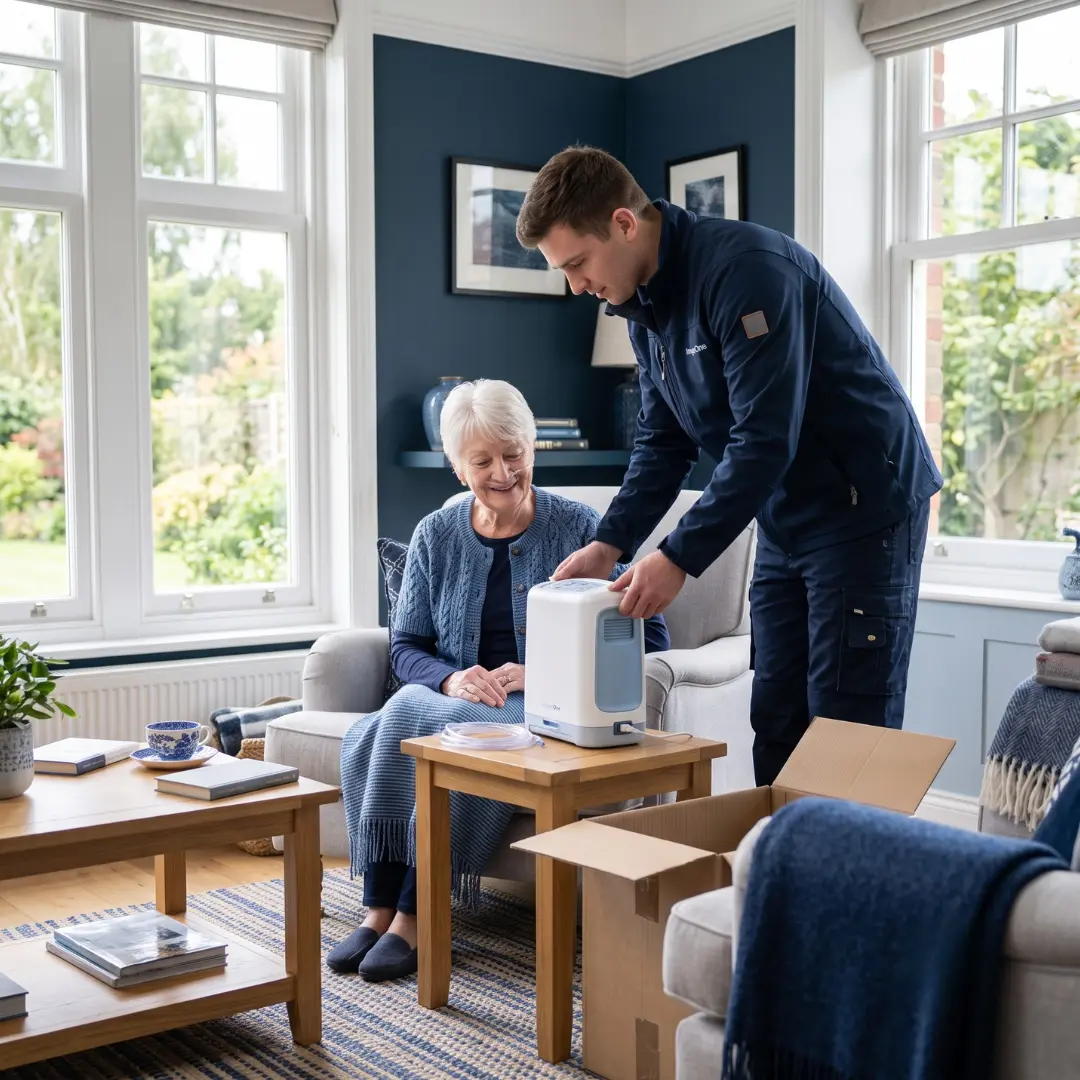
Buying privately also means the device arrives on your schedule, not an assessment waiting list, with free UK delivery and the model of your choosing rather than whatever your regional supplier allocates.
See real, current prices on home and portable models.
Browse Home & Portable Oxygen ConcentratorsNHS vs Buying Your Own: Which Is Right for You?
| Factor | NHS route | Buying privately |
|---|---|---|
| Cost to you | Free at point of use, if you qualify | Full cost upfront, from around £209 |
| Eligibility | Must meet clinical criteria (SpO2 below 92% at rest, typically) | No medical threshold, though a doctor's input on flow rate is recommended |
| Speed | Referral, assessment and stability checks all add time | Ordered and delivered directly, no assessment wait |
| Choice of device | Allocated by your local supplier based on assessed need | You choose the model, brand, and features |
| Ongoing support | NHS supplier handles servicing and safety checks | Manufacturer warranty and customer support, self-managed servicing |
For many people the honest answer is both aren't mutually exclusive. Some patients use an NHS home unit for their primary long-term therapy and a private portable concentrator for travel or days out, since NHS portable provision is more limited than home provision. If you're still going through assessment, or your needs are borderline, a private purchase can bridge that gap rather than replace the NHS process altogether.
Is It Safe to Buy an Oxygen Concentrator Privately?
Yes, provided the device is a genuine, certified medical or wellness product. Broxtal's oxygen concentrators are CE marked or carry equivalent UK conformity certification where applicable, and each product page states the purity level, flow range, and safety documentation. The device itself works on the same principle as NHS-supplied units: pulling in room air, filtering out nitrogen, and delivering concentrated oxygen through a nasal cannula or mask. What changes is who supplies it and how it's funded, not the underlying safety of a properly certified concentrator. As with any oxygen therapy, keep the device at least 2 metres from open flames or lit candles, at least 1.5 metres from other electrical appliances, don't smoke near it, and confirm your flow rate with a healthcare professional first. These are the same precautions NHS home oxygen teams walk patients through at installation, and they apply equally whether the concentrator arrived from an NHS supplier or your own front door.
Vanliga frågor
Can I get an oxygen concentrator on the NHS?
Yes, if a specialist assessment confirms you meet the clinical criteria, most commonly a resting oxygen saturation below 92%. Your GP refers you to a home oxygen assessment service; they don't prescribe it directly.
How do I get referred for NHS home oxygen?
Speak to your GP about your symptoms. If appropriate, they'll refer you to a specialist respiratory or Home Oxygen Assessment and Review (HOS-AR) service, who carry out the formal assessment and order equipment if you qualify.
How long is the NHS waiting list for a home oxygen concentrator?
There's no single national figure, waiting times depend on your local NHS trust and current demand. Ask your GP surgery or local respiratory service for a realistic estimate in your area.
Do I need a prescription to buy an oxygen concentrator privately?
No. Broxtal's oxygen concentrators can be purchased directly without a prescription, though we recommend confirming your correct flow rate with a healthcare professional first.
Is it cheaper to buy an oxygen concentrator privately than wait for the NHS?
NHS provision is free if you qualify, so it's cheaper in pure cost terms. Buying privately costs from around £209 upwards, but removes the referral and assessment wait, which matters if you need support sooner.
For further clinical guidance, refer to the NHS home oxygen treatment guidance.
Not sure which concentrator is right for you? Talk to our product specialists.
Contact Broxtal