


A Nasal Pillow Mask uses two small silicone cushions that sit right at your nostrils, minimal contact, wide field of view, and nothing resting on the bridge of your nose. A Nasal Mask is a triangular cushion that covers your whole nose, giving a more stable seal at higher pressures. If you're a side sleeper, wear glasses in bed, or just don't like anything covering your face, go Nasal Pillow. If you're on a higher pressure setting or breathe forcefully through your nose, a Nasal Mask is usually the more comfortable, more stable fit.
Picking a CPAP mask is one of those decisions that quietly determines whether therapy actually works for you. Get the pressure settings right but the mask wrong, and you'll pull it off at 3am without even remembering. A Nasal Pillow Mask and a Nasal Mask are both worn over the nose only, so they're the two most common choices for people who don't need a full face mask. Here's how they actually differ, and which one fits your situation. Still shopping for the machine itself? Browse our CPAP machines range first, both masks below fit standard CPAP and BiPAP hose connectors.
What Is a Nasal Pillow Mask?
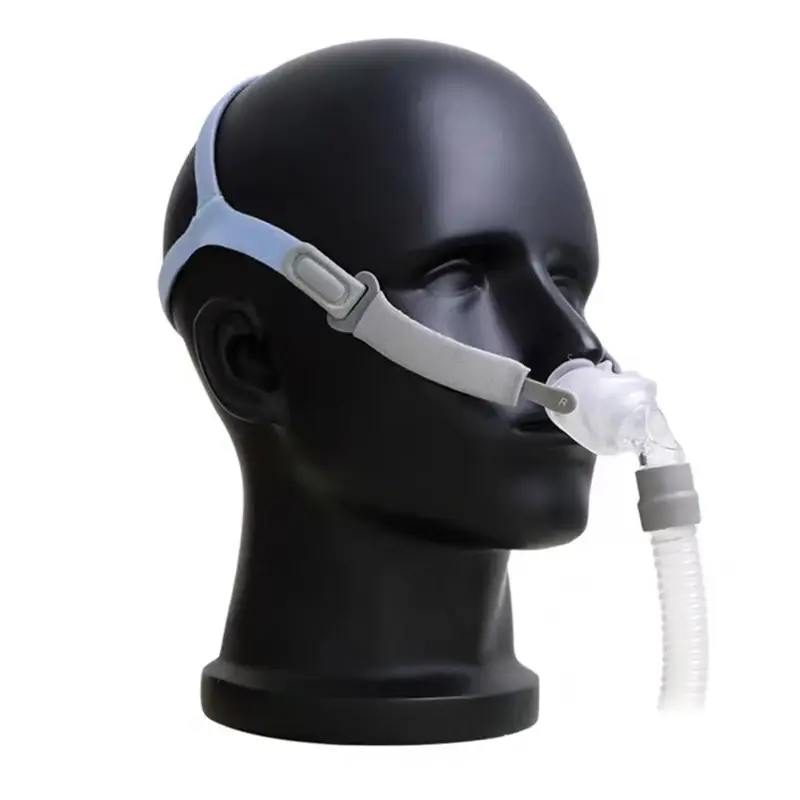
A Nasal Pillow Mask uses two small, soft silicone cushions that sit just inside or directly against the entrance of your nostrils, rather than covering the outside of your nose. Because there's so little material touching your face, it's the lightest, least intrusive style available: nothing rests on the bridge of your nose, your field of view stays wide open, and it works well if you wear reading glasses in bed or sleep on your side.
The trade-off is that air is delivered directly into your nostrils, which some people find can feel more forceful at higher pressure settings, and there's less cushion surface to help the mask stay sealed if you move around a lot at night.
What Is a Nasal Mask?

A Nasal Mask uses a single, larger cushion, usually triangular, that seals around the outside of your whole nose, from the bridge down to just above your top lip. More surface area generally means a more stable seal, which is why a Nasal Mask tends to be the more comfortable choice at higher pressure settings or for anyone who breathes more forcefully through their nose during sleep.
The classic downside of a Nasal Mask has always been the forehead support pad, most designs rest a small frame against your forehead to hold the seal in place, which can leave a light pressure mark after a full night's use. If that's a dealbreaker for you, we also stock the Nasal CPAP Mask N5BNew in stock, a forehead-free Nasal Mask with crown-style headgear instead of a forehead pad. It's £89 and comes in S/M/L/XL.
Nasal Pillow Mask
Minimal Contact CPAP Nose Pillow Mask · £79Best for side sleepers, glasses wearers, and lower-to-mid pressure settings.
- Sits at the nostrils only
- Widest field of view
- Nothing on the nose bridge
Nesemaske
Stable Seal Nasal CPAP Mask NM4 · £79Best for higher pressures, active sleepers, and a steadier overnight seal.
- Covers the whole outer nose
- Larger cushion surface
- Steadier at higher pressure
Nasal Pillow Mask vs Nasal Mask: Comparison Table
| Nasal Pillow Mask | Nesemaske | |
|---|---|---|
| Contact point | Nostril cushions only | Whole outer nose |
| Best egnet for | Side sleepers, glasses wearers, lower/mid pressure | Higher pressure settings, active sleepers |
| Field of view | Widest, minimal facial coverage | Good, slightly less than a pillow mask |
| Pressure marks | Rare, so little contact | Possible from the forehead support pad (or choose the forehead-free N5B) |
| Seal stability if you move | Can shift more easily | Generally more stable |
| Broxtal model & price | CPAP Nose Pillow Mask, £79 | Nasal CPAP Mask NM4, £79 |
Prices correct at time of writing and subject to change, check the product page for the current live price.
Ready to choose? Both are certified, in stock, and ship free across the UK.
Quick Decision Guide
Goal: the lightest possible mask with the widest field of view.
Recommended: Nasal Pillow Mask
Goal: a bigger seal area that holds steady overnight.
Recommended: Nasal Mask
What About a Full Face Mask?
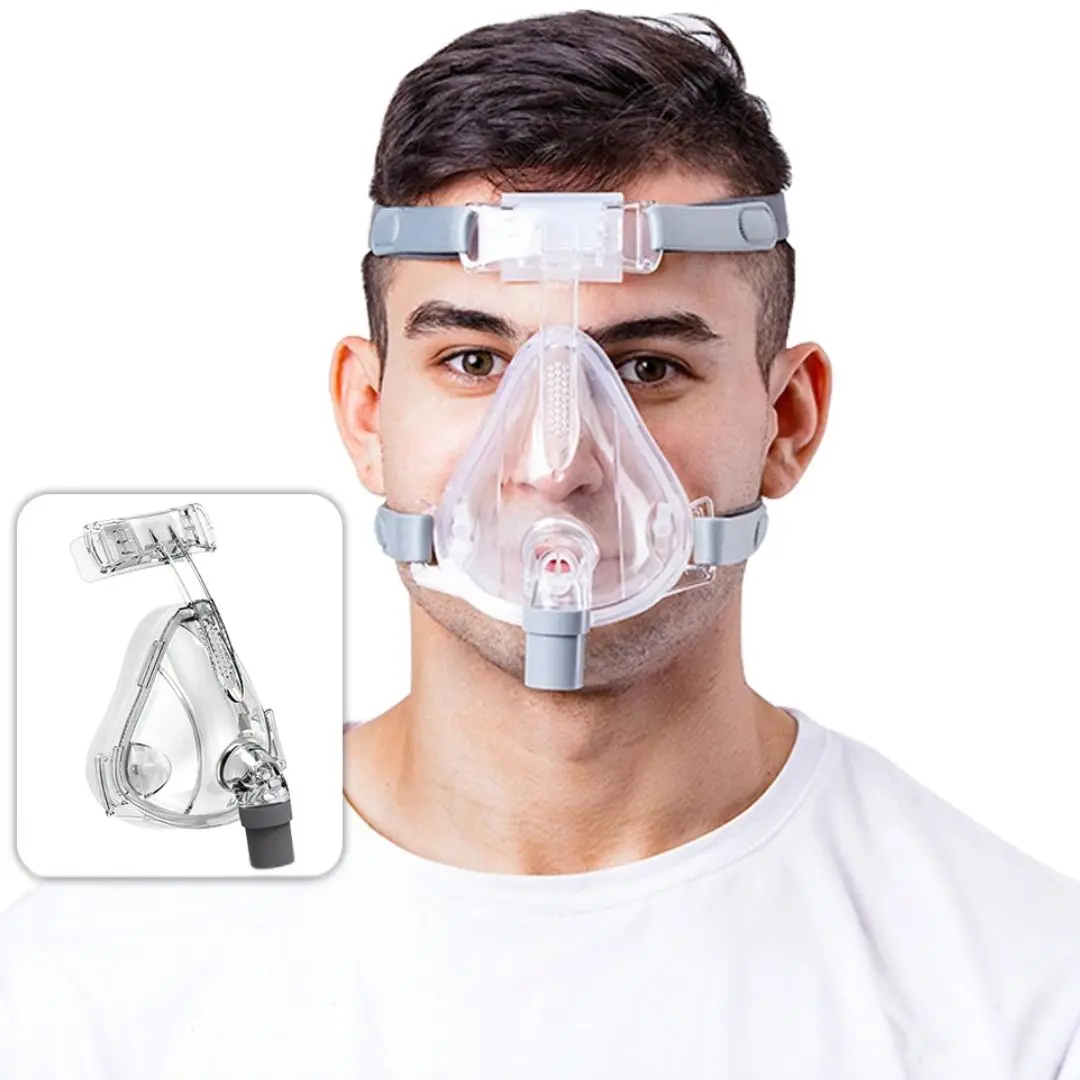
Both mask types above are nose-only, so they assume you breathe through your nose during sleep. If you regularly breathe through your mouth, or have ongoing nasal congestion, neither a Nasal Pillow Mask nor a Nasal Mask will hold a proper seal, air will simply leak out through your mouth instead. In that case a Full Face Mask, which covers both your nose and mouth, is usually the better fit. It's CE certified with an anti-asphyxia safety valve, £79, available in S/M/L.
How Often Should You Change a CPAP Mask?
As a general guide, most manufacturers recommend replacing the silicone cushion every 2-4 weeks with daily use, since the seal material softens over time, and replacing the full mask, headgear included, roughly every 3-6 months. I'm not fully certain this applies identically to every model, cushion life depends on cleaning habits and skin type, so check the care guidance on your mask's product page rather than assuming one number fits all.
A daily wipe-down between replacements keeps the seal working and cuts down on bacteria build-up. Broxtal's CPAP-rengjøringsservietter eller CPAP-rengjørings- og desinfiseringspakke are quick ways to stay on top of it.
Ofte stilte spørsmål
What is the difference between a Nasal Pillow Mask and a Nasal Mask?
A Nasal Pillow Mask uses two small silicone cushions that sit at the entrance of your nostrils, with minimal facial contact. A Nasal Mask uses one larger triangular cushion that covers your entire outer nose, giving a more stable seal, particularly at higher pressure settings.
How often should you change a CPAP mask?
As a general guide, replace the cushion every 2-4 weeks and the full mask, headgear included, roughly every 3-6 months, though this varies by model and how well it's cleaned. Check your specific mask's product page for manufacturer guidance.
Is a Nasal Pillow Mask good?
For many people, yes, particularly side sleepers, glasses wearers, and anyone on a lower-to-mid pressure setting who finds a full mask claustrophobic. It's less ideal at higher pressures or if you move around a lot overnight, where a Nasal Mask tends to hold its seal better.
Can I use a Nasal Pillow Mask or Nasal Mask if I breathe through my mouth?
Not reliably. Both mask types only cover the nose, so mouth breathing during sleep will cause air to leak out and reduce therapy pressure. A Full Face Mask, covering both nose and mouth, is generally the better option if this applies to you.
Does a Nasal Mask leave marks on my face?
The standard Nasal CPAP Mask NM4 uses a forehead support pad that can leave a light pressure mark after a full night's use. If that's a concern, the Nasal CPAP Mask N5B swaps the forehead pad for a forehead-free crown headgear design.
For further guidance on CPAP therapy and getting the most out of your machine, see the NHS overview of sleep apnoea.
Still not sure which mask suits your setup?
Contact Broxtal