

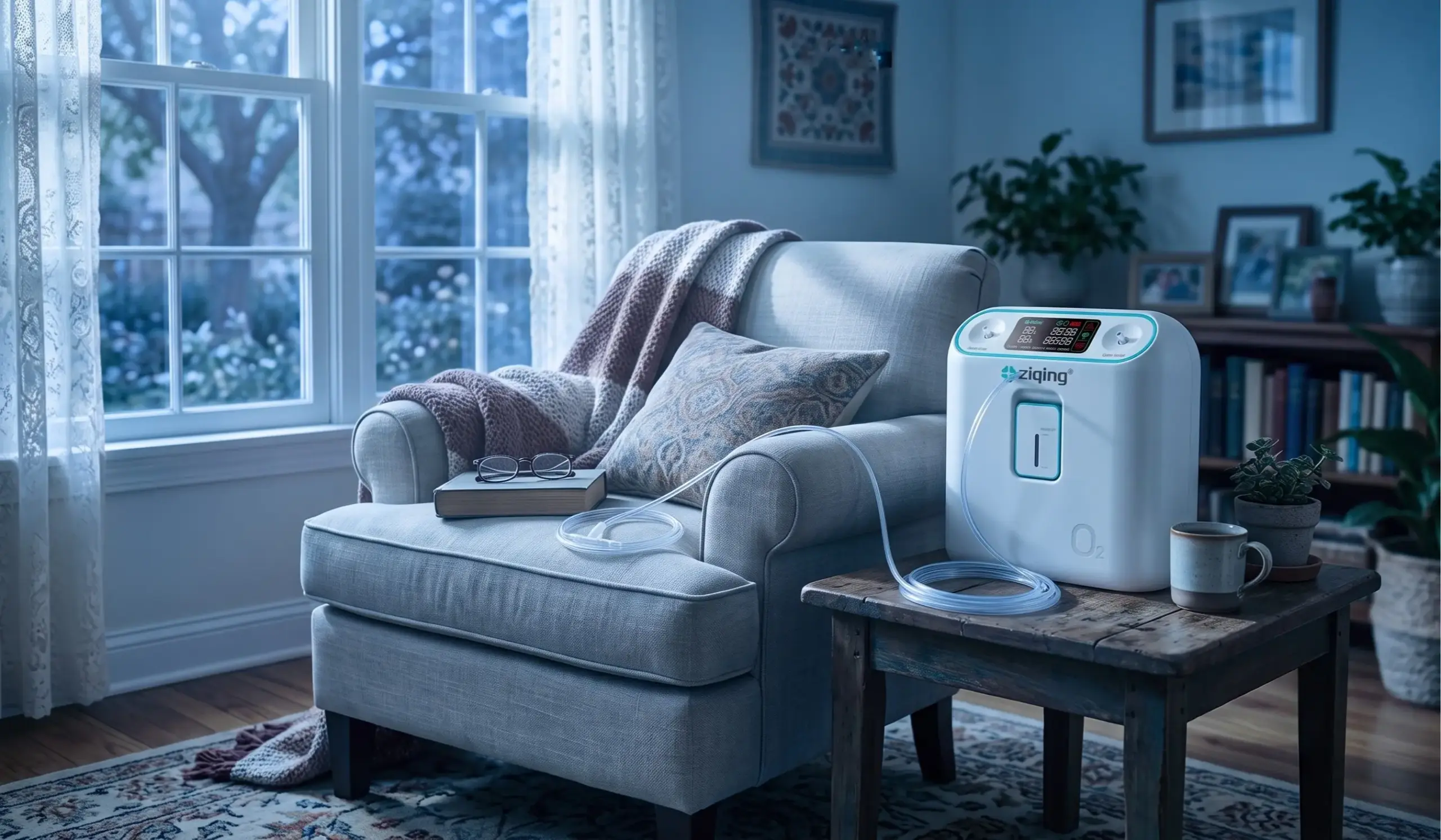
Was macht ein Sauerstoffkonzentrator?
Eine Sauerstoffkonzentrator is a medical device that delivers extra oxygen to people who have trouble breathing on their own. It pulls in air from the room, filters out nitrogen, and sends purified oxygen through a tube into your nose or mask. It's commonly used in Sauerstofftherapie for conditions like COPD, sleep apnea, or recovery from illness, and for many people it's the difference between struggling for breath and getting on with daily life.
What Is an Oxygen Concentrator and How Does It Work?
A traditional oxygen machine might make you think of bulky tanks, but an oxygen concentrator works differently. Instead of storing oxygen, it produziert Sauerstoff auf Abruf using the air already around you, so there's nothing to run out of and nothing to refill.
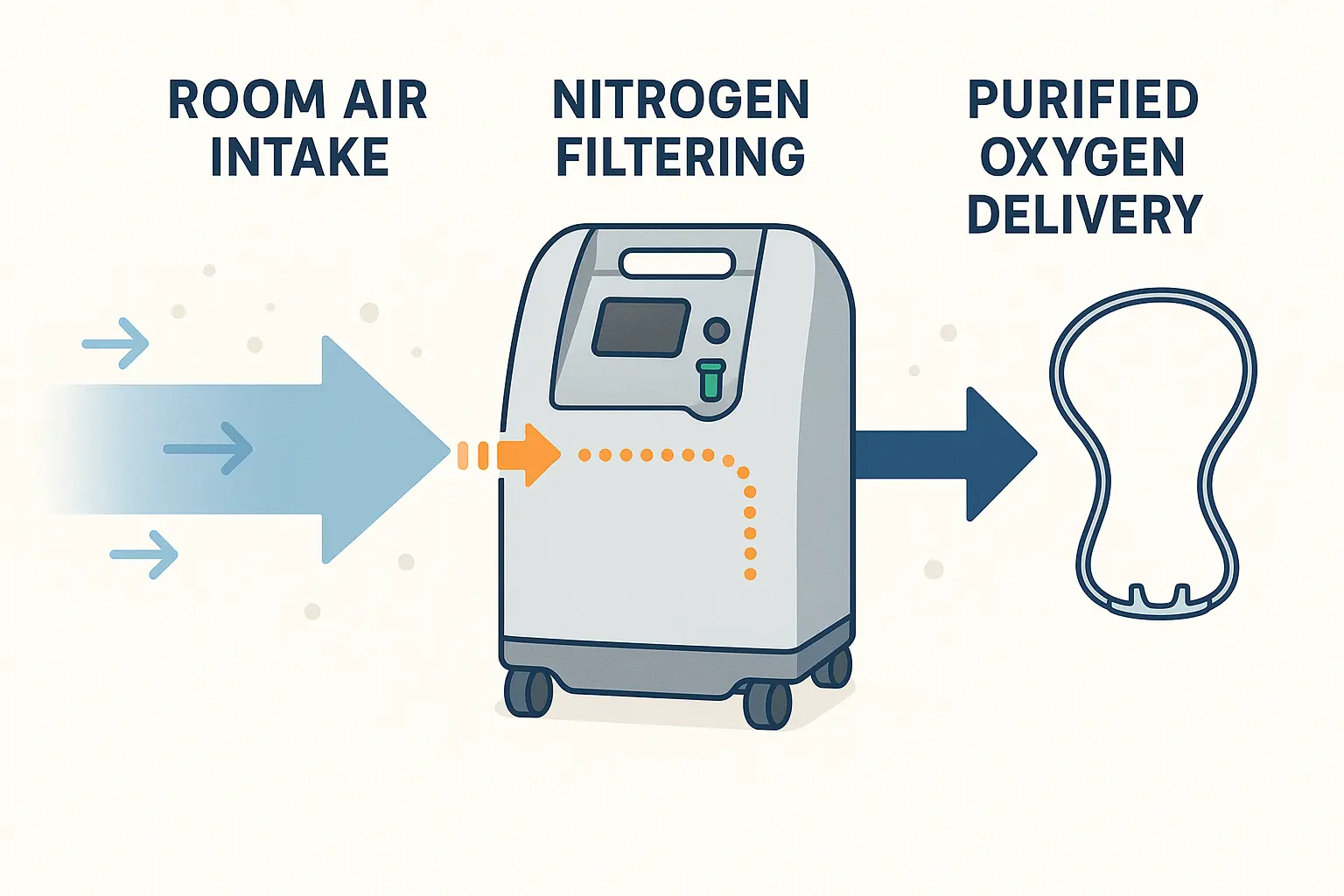
The process behind this is called Druckwechseladsorption (PSA). Here's what actually happens inside the machine:
- Air intake: The machine draws in surrounding room air, roughly 21% oxygen and 78% nitrogen.
- Nitrogen filtering: That air passes through a molecular sieve bed, a filter designed to trap and separate nitrogen.
- Purified delivery: What's left is concentrated oxygen, typically 90–95% pure, delivered through a nasal cannula or mask.
This cycle repeats continuously while the machine runs, which is why it never needs refilling the way an oxygen tank does. It supports breathing therapy by helping your lungs get more oxygen when they can't absorb enough naturally.
Who Needs an Oxygen Concentrator?
This device is commonly prescribed or recommended for people with:
- Chronisch obstruktive Lungenerkrankung (COPD)
- Lange Erholungsphase bei COVID oder Lungenentzündung
- Severe asthma or pulmonary fibrosis
- Sleep apnea, especially when combined with low blood oxygen levels
- Herzinsuffizienz mit niedriger Sauerstoffsättigung
- Recovery from surgery or serious illness where oxygen levels are temporarily low
It's also useful for older adults, caregivers managing chronic conditions, or anyone experiencing low oxygen levels during daily life or sleep. If you're not sure whether your symptoms point to low oxygen or something else, that's a conversation for a doctor, not a guess to make alone.
Explore our full range of oxygen concentrators.
Sauerstoffkonzentratoren kaufenCan You Sleep with an Oxygen Concentrator?
Yes, you can sleep with an oxygen concentrator, especially if your doctor recommends it for conditions like sleep apnea, COPD, or shallow nighttime breathing. The important part is choosing the right delivery type for overnight use.
| Merkmal | Impulsfluss | Kontinuierlicher Fluss |
|---|---|---|
| Wie es funktioniert | Delivers oxygen only when you inhale | Delivers oxygen nonstop, even between breaths |
| Am besten für | Active users, daytime use, travel | Sleep, higher oxygen needs, shallow breathing |
| Lebensdauer der Batterie | Longer, more efficient | Shorter, uses more power |
| Geräuschpegel | Generally quieter | May be slightly louder |
| Größe des Geräts | Often smaller and lighter | Usually larger, especially home models |
| Kompatibilität im Schlaf | Not ideal, no oxygen between breaths | Recommended for overnight use |

For sleep, continuous flow is strongly recommended, because it keeps delivering oxygen even if your breathing is irregular or you sleep with your mouth open, both common during deep sleep.
Recommended for sleep: High Purity Oxygen Concentrator 7L, YK-201N (quiet and stable) and 7L Oxygen Concentrator Machine, Dual Function (sleep-friendly design).
How Long Can You Be on an Oxygen Concentrator?
There's no fixed time limit. Many people use an oxygen concentrator for years, continuously, as part of long-term management for conditions like COPD. Others use one temporarily, during recovery from illness or surgery, until their own oxygen levels return to normal. Your usage duration and daily hours should be set by your doctor based on your specific oxygen saturation levels, not a general rule, since using it more or less than prescribed can affect how well it works.
What If Your Sleep Issues Are Caused by Sleep Apnea?
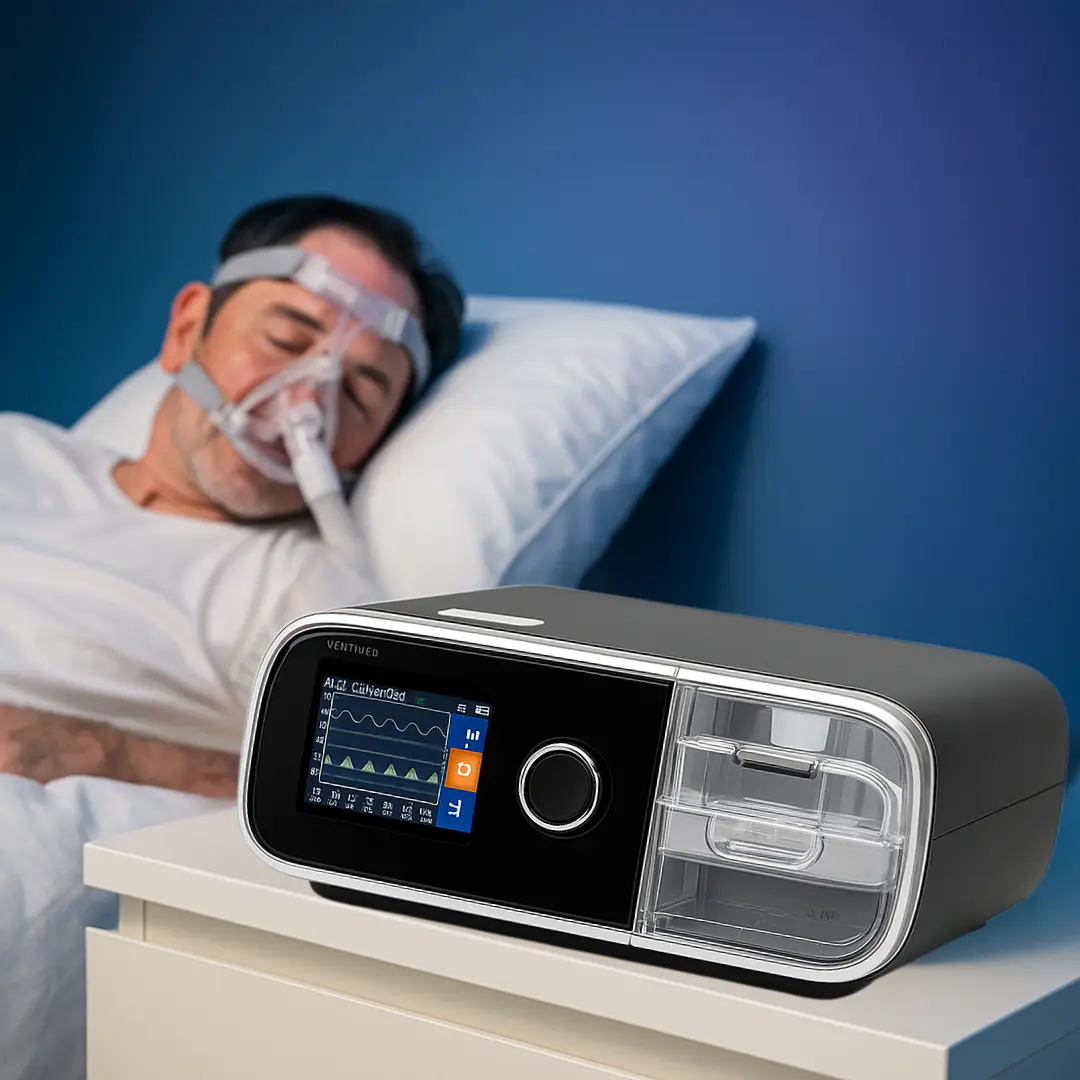
If your breathing problems at night are due to sleep apnea rather than low oxygen levels, your doctor may recommend a CPAP or BiPAP machine instead of, or alongside, an oxygen concentrator. These machines keep your airway open and prevent the snoring, choking, or breathing pauses caused by obstructive or central sleep apnea.
CPAP vs BiPAP: What's the Difference?
- CPAP (Continuous Positive Airway Pressure): liefert einen konstanten Druck, um Ihre Atemwege offen zu halten.
- BiPAP (Bilevel Positive Airway Pressure): gives two pressure levels, higher on inhale, lower on exhale, for a more natural breathing feel.
Learn more in our full guide: CPAP vs. BiPAP: Wann man sie bei Schlafapnoe einsetzt.
Recommended devices: YA LING™ Smart CPAP/APAP-Gerät und Auto Smart BiPAP Machine Sleep Therapy Device.
If you or a loved one snores loudly, wakes up gasping, or feels exhausted during the day despite a full night's sleep, one of these machines may be more effective than oxygen therapy alone.
Was sind die Nachteile eines Sauerstoffkonzentrators?
A genuinely useful guide tells you the drawbacks too. Oxygen concentrators are highly effective, but they're not without trade-offs:
| Nachteil | Einzelheiten | How to solve it |
|---|---|---|
| Elektrizitätsabhängig | Needs power to run, so it may not work during outages unless you have battery backup | Choose a model with a battery option, or keep a portable unit as backup |
| Lärm | Some units produce a humming sound | Choose a low-noise model, especially for bedrooms |
| Einschränkungen der Mobilität | Home machines are stationary | A portable oxygen concentrator solves this for anyone who moves around a lot |
| Anfängliche Lernkurve | Caregivers or users may need brief training to use it correctly | Choose a model with a simple display and clear instructions |
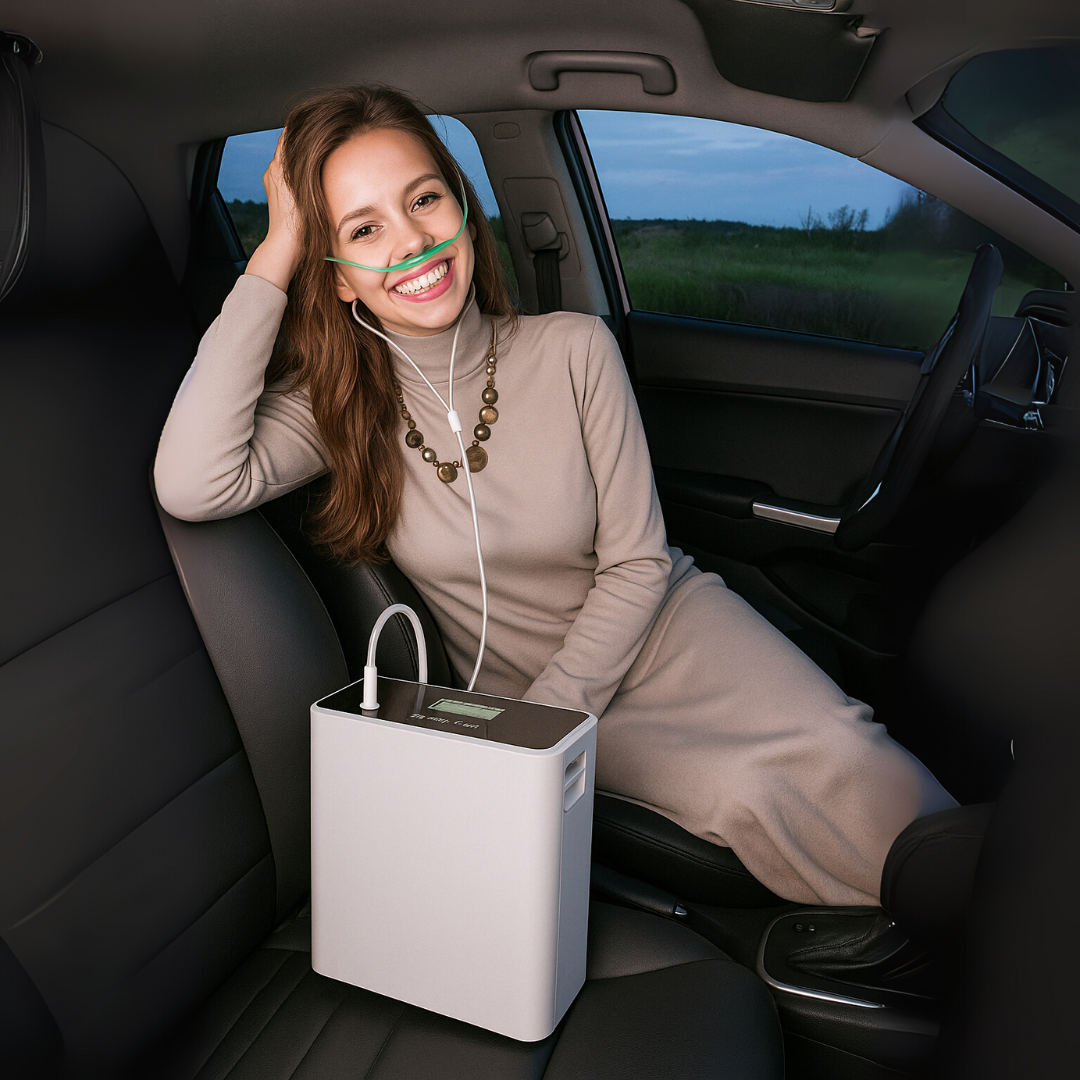
Models that address these issues: Tragbarer Sauerstoff-Konzentrator 1-5L (lightweight and rechargeable) and OXU™ Tragbarer Generator Maschine (travel-friendly and compact).
Need a portable solution instead of a home unit?
Shop Portable Oxygen ConcentratorsOxygen Concentrator Safety Tips
Whether you're using one yourself or caring for someone who is, these basics keep therapy safe and effective:
- Keep the machine at least 2 metres from open flames, gas stoves, or lit candles. Oxygen doesn't burn itself, but it makes anything nearby burn faster.
- Never smoke, or let anyone smoke, near an active oxygen concentrator or while wearing a cannula.
- Clean or replace the air filter regularly, a blocked filter reduces oxygen purity and strains the motor.
- Don't use oil-based lotions, petroleum jelly, or aerosol sprays near the device or mask.
- Keep the machine's air intake unobstructed, don't tuck it against a wall or under bedding.
- Follow your doctor's prescribed flow rate exactly, more isn't automatically better, and less won't give the support you need.
- Have a backup plan for power outages if you rely on continuous therapy.
Wie Sie das richtige Sauerstoffgerät auswählen
Achten Sie bei der Auswahl eines Sauerstoffgeräts darauf:
- Doctor's recommendation: your prescribed flow rate in LPM is non-negotiable.
- Continuous vs pulse flow: pulse suits active daytime use, continuous suits sleep.
- Portability needs: home use only, or on the go too?
- Ease of use: for older adults or caregivers, simple controls matter more than extra features.
If you're caring for a loved one, look for quiet operation, an easy-to-read display, and reliable customer support behind the machine. Choosing between a portable and a home unit specifically? See our Ratgeber zum Kauf eines tragbaren Sauerstoffkonzentrators for a full model-by-model comparison.
Häufig gestellte Fragen
Was macht ein Sauerstoffkonzentrator?
It pulls in room air, filters out nitrogen, and delivers purified oxygen, typically 90-95% pure, through a nasal cannula or mask, supporting people whose lungs can't absorb enough oxygen naturally.
How long can a patient be on an oxygen concentrator?
There's no fixed limit. Many people use one continuously for years as part of long-term condition management, while others use one temporarily during recovery. Usage duration should be set by a doctor based on your oxygen levels.
What are the disadvantages of an oxygen concentrator?
It depends on electricity, may produce some noise, home units are stationary, and there's a short learning curve for new users. Portable models and battery backups address most of these limitations.
Can you sleep with an oxygen concentrator?
Yes. Continuous flow is recommended for overnight use, since it keeps delivering oxygen even during irregular breathing or mouth breathing during sleep.
Is an oxygen concentrator the same as a CPAP machine?
No. An oxygen concentrator adds extra oxygen to your air supply. A CPAP machine keeps your airway open using air pressure. If your issue is sleep apnea rather than low oxygen, a CPAP or BiPAP is usually the more effective device.
Weitere Leitlinien des NHS zur Sauerstofftherapie zu Hause finden Sie unter NHS-Übersicht zur Sauerstofftherapie zu Hause.
Talk to our product specialists for a personalised recommendation.
Kontaktieren Sie Broxtal