

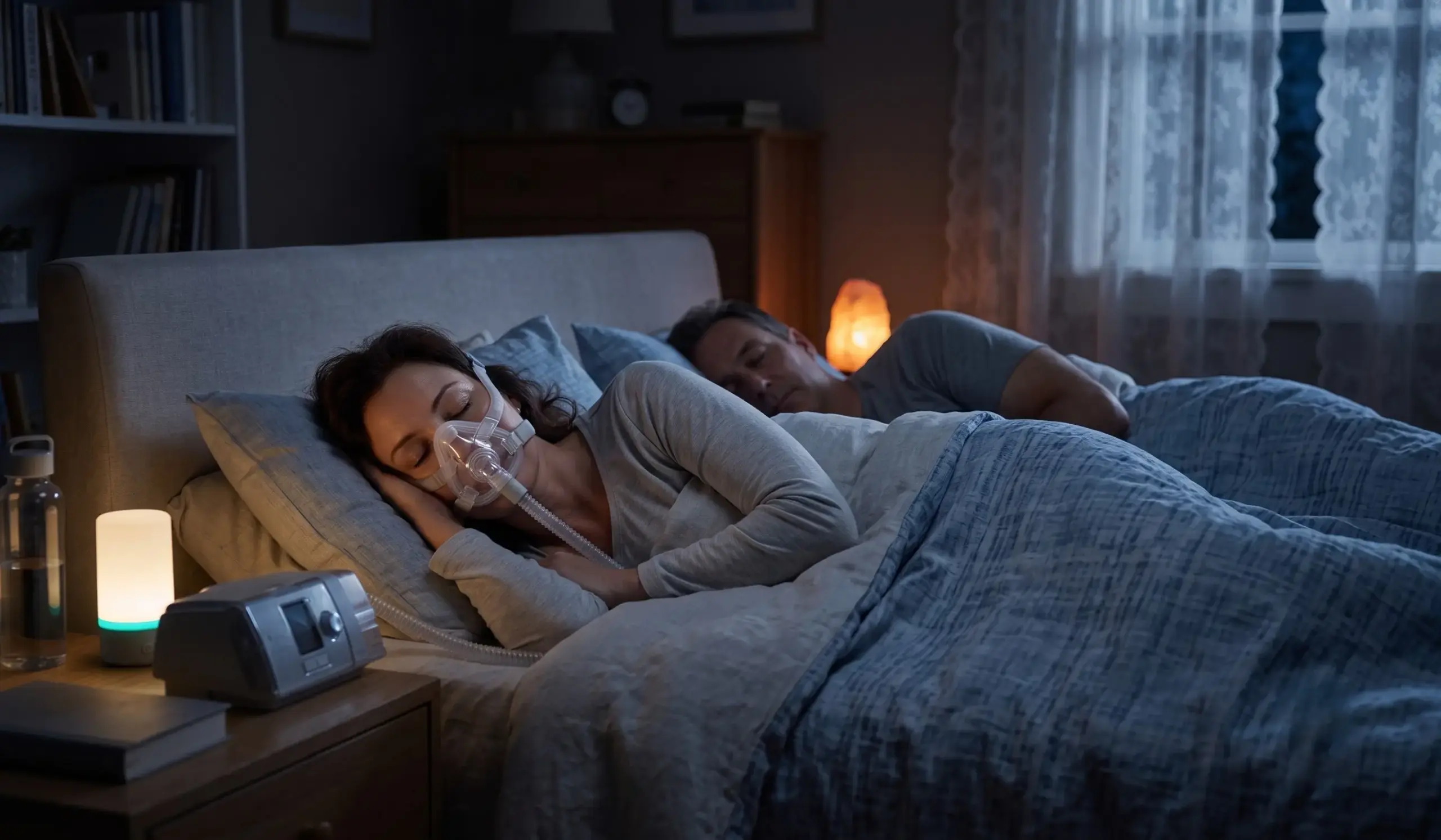
Almost everyone snores at some point. But there's a difference between harmless snoring and snoring that signals something more serious happening to your breathing at night. The line between the two isn't always obvious, which is exactly why so many people with sleep apnea go undiagnosed for years, often decades.
This guide walks you through that journey, from what's actually happening when you snore, to the point where it becomes a health risk, to the devices that address it at every level of severity.
What Actually Causes Snoring?
When you fall asleep, the muscles in your throat relax. For most people, air still moves through the airway freely. But when the throat narrows, air has to move faster through a smaller space, causing the surrounding soft tissue to vibrate. That vibration is the sound of snoring.
Common causes include:
- Sleeping on your back, which lets gravity pull the tongue backward into the airway
- Alcohol or sedatives before bed, which relax throat muscles further than usual
- Nasal congestion, which forces mouth breathing and raises airway resistance
- Excess weight, especially around the neck, which narrows the airway
- Naturally narrow airways or enlarged tonsils
Most occasional snoring is harmless. The problem comes when the airway doesn't just narrow but closes completely, even briefly. That's when snoring becomes sleep apnea.
When Does Snoring Become Sleep Apnea?
Sleep apnea is classified as a sleep disorder where breathing stops and starts repeatedly during sleep. The most common type, obstructive sleep apnea (OSA), happens when the throat muscles relax so much that they block airflow entirely for ten seconds or more. The brain detects the oxygen drop and jolts the body awake just enough to restart breathing, often with a gasp or snort. This can happen dozens or even hundreds of times a night, which is why OSA causes such severe daytime exhaustion even after a full night in bed.
According to the NHS overview of sleep apnoea, symptoms to watch for include loud snoring, gasping or choking during sleep, waking with a headache or dry mouth, and excessive daytime sleepiness. A sleep study is the only way to diagnose OSA and determine its severity. The British Lung Foundation recommends speaking to your GP if you or your partner notice these signs.
Why Untreated Sleep Apnea Is a Serious Health Risk
The repeated oxygen drops during sleep don't just make you tired. Over time they put sustained strain on the cardiovascular system. Research consistently links untreated obstructive sleep apnea to:
- High blood pressure (hypertension)
- Increased risk of heart disease and stroke
- Type 2 diabetes
- Impaired memory and concentration
- Depression and mood changes
- Higher accident risk due to daytime drowsiness
The good news is that each level of severity has a well-established treatment, and most people see significant improvement quickly after starting the right one.
The Right Device for Your Level of Severity
Stage 1: Managing Simple Snoring
If your snoring is loud and disruptive but you don't have confirmed sleep apnea, a smart anti-snoring device can make a real difference without the commitment of a full CPAP setup.

The YA50 Smart Anti-Snoring Device uses auto-adjusting positive airway pressure through a lightweight nasal mask to gently hold the airway open. At 53.3g, it's barely noticeable during sleep. The companion app tracks breathing patterns overnight so you can see exactly what's happening, and settings adjust automatically based on what the sensors detect.
- Auto-adjusting or continuous pressure modes
- Ergonomic nasal mask with skin-friendly headgear
- App-based sleep and snoring tracking
- Ideal for snoring and mild breathing irregularities
Stage 2: Treating Mild to Moderate Sleep Apnea
Once snoring progresses to confirmed obstructive sleep apnea, a CPAP machine is the clinical gold standard. It delivers a continuous stream of pressurised air through a mask, holding the airway open so breathing pauses can't happen. Most people using CPAP consistently report a significant improvement in daytime energy within the first few weeks.
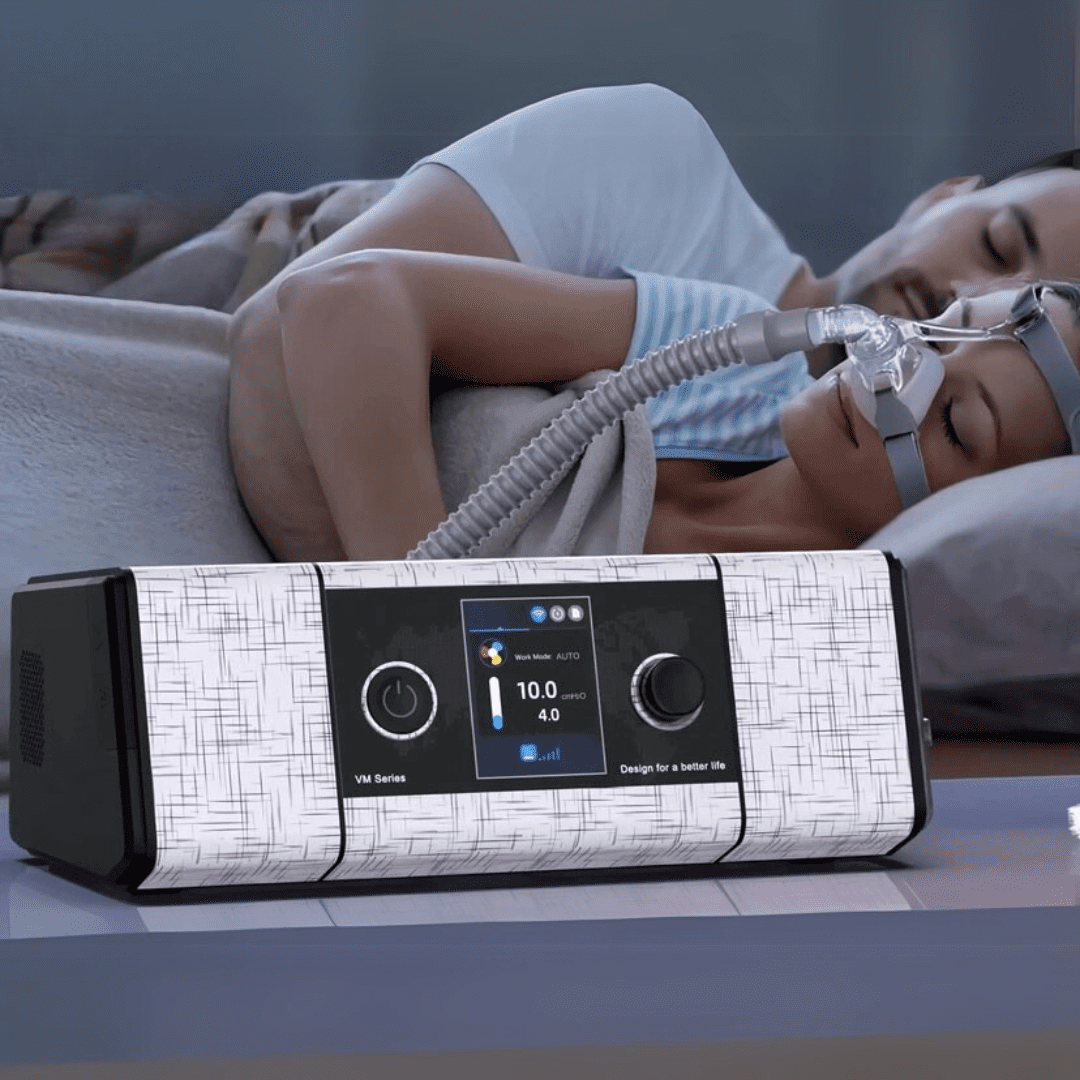
The Auto CPAP Machine VM-6 automatically adjusts pressure throughout the night based on your breathing, so it delivers the minimum pressure needed at any given moment rather than a fixed level all night. This makes it more comfortable for people who are new to CPAP or who find a constant fixed pressure harder to tolerate.
- Auto-adjusting pressure (APAP mode) for maximum comfort
- Data recording for therapy review
- Suitable for mild to moderate obstructive sleep apnea
- Compatible with standard CPAP masks
For a full guide on CPAP, see: CPAP Machine: Everything You Need to Know.
Stage 3: Managing Severe or Complex Sleep Apnea
For patients with severe OSA, central sleep apnea, COPD, or heart failure, or for anyone who struggles to exhale against a fixed CPAP pressure, a BiPAP machine is often a better fit. BiPAP delivers two pressure levels: higher on inhale to open the airway, lower on exhale so breathing out feels more natural. This makes it substantially easier to use for people with higher pressure requirements or complex conditions.
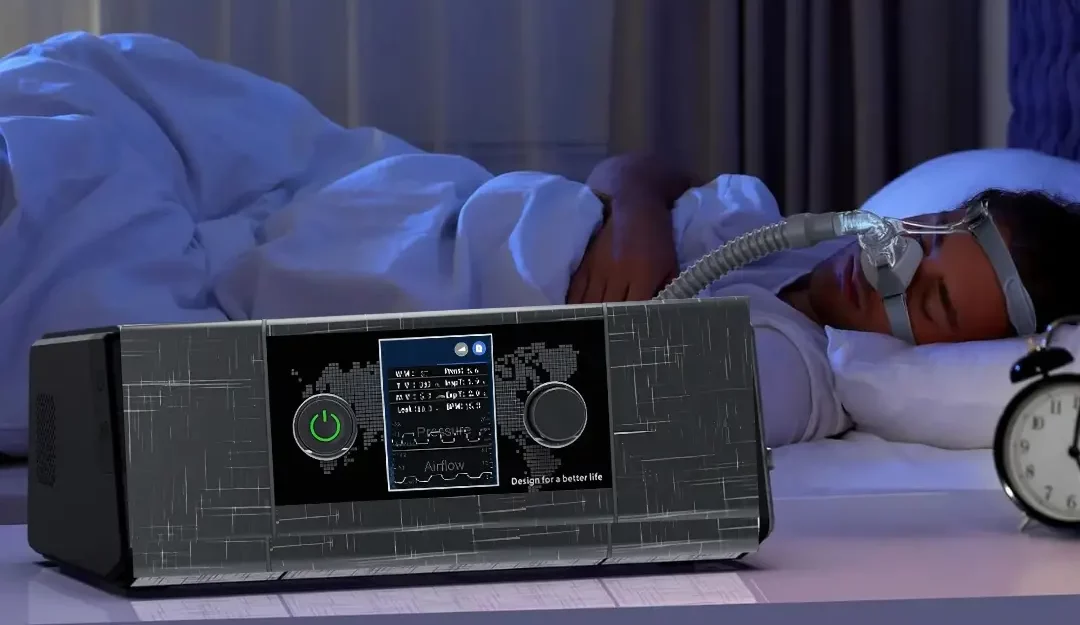
The Auto BiPAP Machine VM-8 runs at under 22dB, making it one of the quietest machines in this category. It auto-adjusts both inhale and exhale pressure throughout the night based on real-time breathing data, with a heated humidifier and smart alarm system built in.
- Dual-pressure: higher IPAP on inhale, lower EPAP on exhale
- Under 22dB operating noise
- Heated humidifier for airway comfort
- Smart alarms: mask off, apnea events, pressure abnormalities
- Suitable for severe OSA, central sleep apnea, and COPD
Unsure whether you need CPAP or BiPAP? See: CPAP vs BiPAP: When to Use Them for Sleep Apnea.
Browse all CPAP and BiPAP machines with free UK delivery.
Shop Sleep Therapy DevicesDevice Comparison at a Glance
| Device | Best for | Pressure delivery | Noise |
|---|---|---|---|
| YA50 Anti-Snoring Device | Simple snoring, mild irregularities | Auto-adjusting, single level | Very quiet |
| Auto CPAP VM-6 | Mild to moderate OSA | Auto-adjusting continuous pressure | Quiet |
| Auto BiPAP VM-8 | Severe OSA, central apnea, COPD | Dual pressure: IPAP and EPAP | Under 22dB |
Does Snoring Always Mean Sleep Apnea?
No. Snoring is common and often harmless. The difference between snoring and sleep apnea is whether breathing actually stops. Snoring is the sound of restricted airflow; sleep apnea is what happens when that restriction becomes a complete blockage, even briefly. You can snore without having sleep apnea, and, less commonly, you can have sleep apnea without prominent snoring.
Lifestyle Changes That Help Alongside a Device
No device works in isolation. These changes are consistently shown to reduce snoring and OSA severity:
- Sleeping on your side instead of your back
- Avoiding alcohol and sedatives within 3 hours of bedtime
- Managing weight, since even modest weight loss reduces airway pressure
- Treating nasal congestion, whether seasonal or structural
- Establishing a consistent sleep schedule
Frequently Asked Questions
What is the difference between snoring and sleep apnea?
Snoring is the sound of vibrating throat tissue when airflow is restricted but still present. Sleep apnea is when the airway closes completely, stopping breathing entirely for ten seconds or more. Sleep apnea requires medical treatment; simple snoring often doesn't.
Can a CPAP machine cure snoring?
CPAP is prescribed for sleep apnea, not snoring alone. However, it effectively eliminates snoring by keeping the airway open with continuous air pressure. It's not typically the first option for people who snore without a sleep apnea diagnosis.
What is the best device for snoring without sleep apnea?
A smart anti-snoring device, such as the YA50, uses gentle positive airway pressure and sensors to detect and respond to snoring without the full complexity of a CPAP machine. It's a good starting point for people who haven't yet been assessed for sleep apnea.
How is sleep apnea diagnosed in the UK?
Your GP can refer you for a sleep study, either in a sleep clinic or using a home sleep apnea test kit. The study measures breathing, oxygen levels, and heart rate overnight. The NHS provides this assessment, though waiting times vary by area.
Is BiPAP better than CPAP for sleep apnea?
Not necessarily better, but more appropriate for certain people. BiPAP is preferred for severe OSA, central sleep apnea, and patients with COPD or heart conditions who need different pressure levels for inhale and exhale. For straightforward obstructive sleep apnea, CPAP is usually the first-line recommendation.
For further guidance on diagnosis and treatment options, see the NHS overview of sleep apnoea and the British Lung Foundation sleep apnoea guidance.
Not sure where to start? Talk to our product specialists.
Contact Broxtal