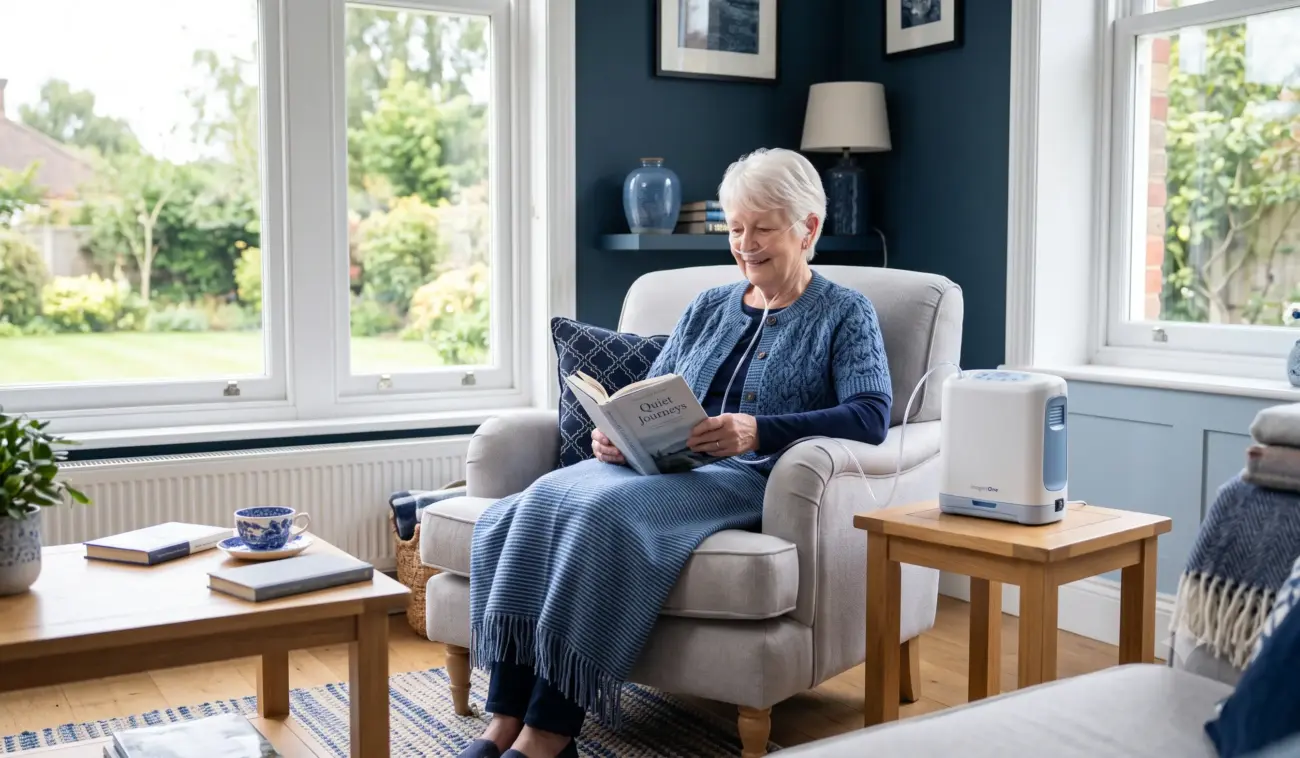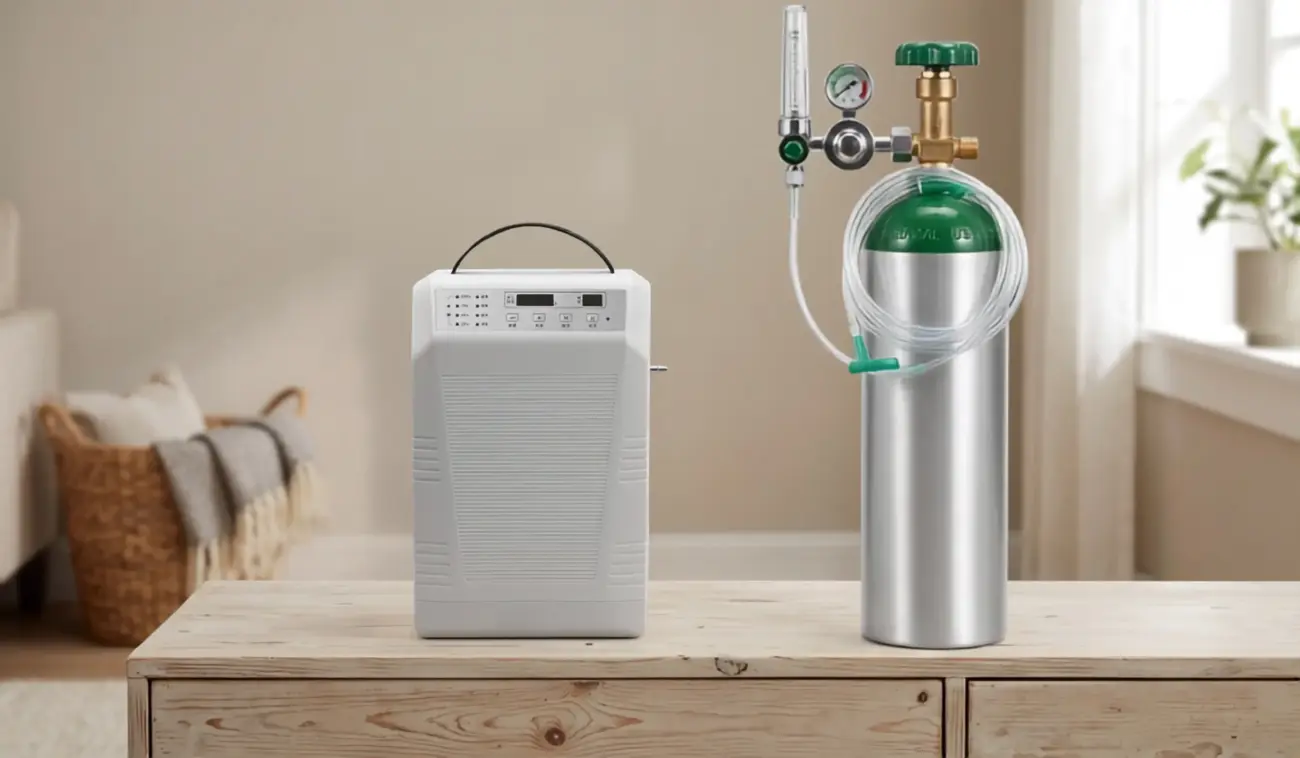

Choose a portable concentrator if you need oxygen on the move, travelling, running errands, staying active outside the house. Choose a home concentrator if you need higher, steady flow for long stretches at home, it's generally cheaper for that use and doesn't rely on a battery. Many people who need both end up using a home unit as their main device and a portable one for days out.
If you've just been told you need supplemental oxygen, or you're supporting someone who has, "portable or home?" is usually the first real decision to make, and it's not always obvious which one fits. Both do the same core job, delivering concentrated oxygen, but they're built for different situations. Here's how to tell which one you actually need, and where the real cost differences come from.
Portable vs Home Oxygen Concentrator: The Differences at a Glance
| Factor | Portable | Home |
|---|---|---|
| Weight | As light as 1.2kg-1.5kg (e.g. DEDAKJ, KPS, Boeka), carry strap included | Heavier, designed to stay in one spot |
| Power source | Rechargeable battery + mains adapter | Mains power only |
| Typical flow | Pulse-dose, roughly 0.6-4L/min depending on model | Continuous flow, typically 1-8L/min depending on model |
| Noise level | As low as under 40dB on some models (e.g. KPS 4L) | Not independently verified for every model, check the product page |
| Best for | Travel, errands, staying active outside the home | Long stretches at home, overnight use, higher flow needs |
| Typical price | From £240 | From £209 |
Weight, battery and flow figures are pulled from real Broxtal product pages for the specific models shown (DEDAKJ, KPS 4L, Boeka Mini). Always confirm exact specs on the individual product page before buying, models vary.
Not sure which fits your situation? Both are in stock with free UK delivery.
When You Need a Portable Oxygen Concentrator
A portable concentrator makes sense if your daily life doesn't stop at your front door. It's the right call if you:
- Travel regularly, whether that's flights, day trips, or visiting family
- Still want to get out for walks, shopping, or social visits
- Need a backup device for when you're away from your home unit
- Have oxygen needs that fall within pulse-dose delivery, which most portables use
The trade-off is battery life and, on most models, a lower maximum flow than a home unit. If your prescribed flow rate is on the higher end, that's worth checking against the specific model's specs before you buy, not just assuming any portable will do. Most portables run on pulse-dose delivery, which senses your breath and releases oxygen only as you inhale, this is efficient for battery life but isn't the same as the continuous flow some higher-need patients require.
When You Need a Home Oxygen Concentrator
A home concentrator is the better fit if most of your oxygen use happens in one place. It suits people who:
- Need continuous flow rather than pulse-dose delivery
- Require a higher flow rate than portable units typically support
- Spend the majority of the day and night at home
- Want a device that never needs charging or battery management
Because it plugs straight into the mains, there's no battery to plan around, which some people find simpler for consistent, longer-duration use. Home units also tend to run quieter at higher flow settings than a comparably-priced portable, which matters if it's going to be running for most of the day in a shared living space.
Can You Use a Portable Oxygen Concentrator at Home?
Yes, most portable concentrators work perfectly well plugged into the mains at home, using the included AC adapter, so you don't need a separate home unit just to use it indoors. The main thing to check is whether the flow rate is enough for your needs when you're stationary for long periods, since portables are generally designed around lighter, pulse-dose delivery rather than sustained higher continuous flow.
Can You Sleep With a Portable Oxygen Concentrator?
Many people do use a portable concentrator overnight, but it depends on the specific model's flow settings and how it performs in pulse-dose mode while you're breathing more slowly during sleep. This is worth confirming with your doctor or respiratory nurse based on your prescribed settings. We've covered this in more detail in Can You Sleep With a Portable Oxygen Concentrator?
Free UK delivery on all oxygen concentrators, home and portable.
Browse Oxygen ConcentratorsCost Comparison: Portable vs Home Oxygen Concentrators
Real prices, not vague ranges. Here's what you'd pay right now at Broxtal:
| Model | Type | Price |
|---|---|---|
| 1-8L Home Oxygen Concentrator, DGF | Home | £209 |
| KPS Portable Oxygen Concentrator 4L | Portable | £479 |
| DEDAKJ Small Portable Oxygen Concentrator | Portable | £579 |
| Boeka Mini Oxygen Concentrator | Portable | £649 |
Prices correct at time of writing and subject to change, check the product page for the current live price.
As a general pattern, home units tend to sit at the lower end of the price range for the oxygen output they deliver, while portables carry a premium for the battery, compact build, and travel-ready design. If budget is the deciding factor and you don't need to leave the house often, a home unit usually gets you more flow for less money. If mobility matters more than saving a few hundred pounds upfront, that premium on a portable buys back your ability to travel, run errands, or simply leave the house without planning your day around a fixed machine.
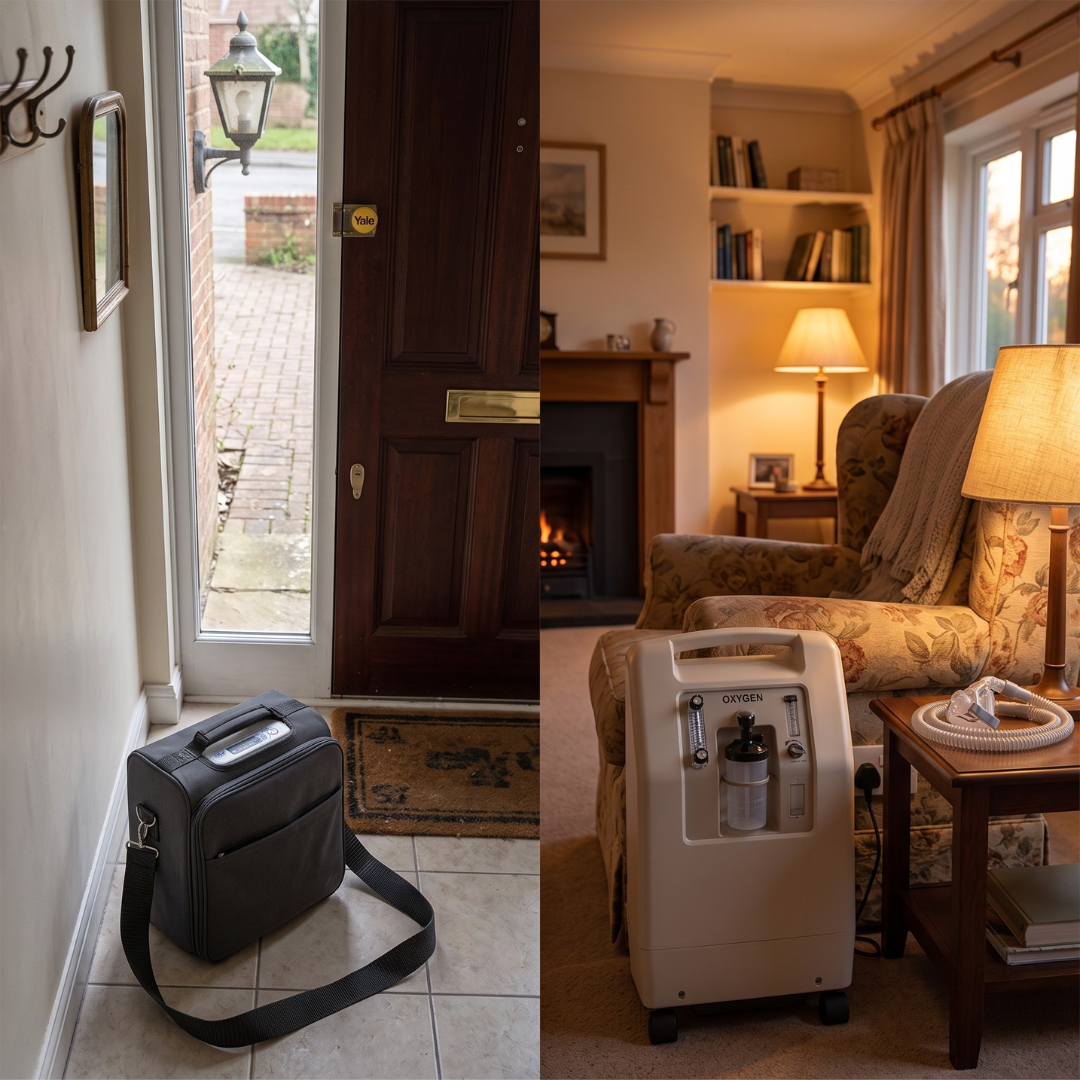
Some people land on both: a home unit for daily use and a lighter portable for the days they're out of the house, rather than treating it as a single either/or purchase.
Battery and Running Costs
Portable concentrators run on rechargeable batteries. Across the models we stock, battery life typically runs up to 3 hours per charge on entry-level units and 3+ hours on models with a 5000mAh battery, such as the DEDAKJ and Boeka Mini, depending on your flow setting. A spare battery is available for most models if you need longer stretches away from a plug socket, and it's usually a worthwhile one-off cost if you travel often rather than something to buy later out of necessity.
Running costs day to day are low for both types, since concentrators simply draw in room air rather than needing consumable oxygen refills, unlike oxygen cylinders which require ongoing rental or refill fees. The main ongoing cost to budget for on either device is periodic filter replacement, which is inexpensive and infrequent, and standard electricity use for a home unit running continuously.
FAQs About Portable vs Home Oxygen Concentrators
Which is better, a portable or home oxygen concentrator?
Neither is universally "better", it depends on your lifestyle. Portable suits people who need oxygen while out and about, home suits people who need higher, steady flow mostly in one place.
Can I use a portable oxygen concentrator at home?
Yes, most portable concentrators plug into the mains and work well indoors, though it's worth checking the flow rate matches your needs for extended stationary use.
Is a home oxygen concentrator cheaper than a portable one?
Generally yes. Home units tend to offer more oxygen output for the price since they don't need a battery or a compact travel-ready build.
Can you sleep with a portable oxygen concentrator?
Many people do, but it depends on the specific model and your prescribed flow settings. Check with your doctor or respiratory nurse to confirm it's right for your needs overnight.
For further guidance on home oxygen provision and eligibility, see the NHS home oxygen treatment guidance. If you're weighing up NHS provision against buying privately, our guide Can I Get an Oxygen Concentrator on the NHS? covers eligibility and the referral process.
Still not sure which one fits your situation? Talk to our product specialists.
Contact Broxtal