
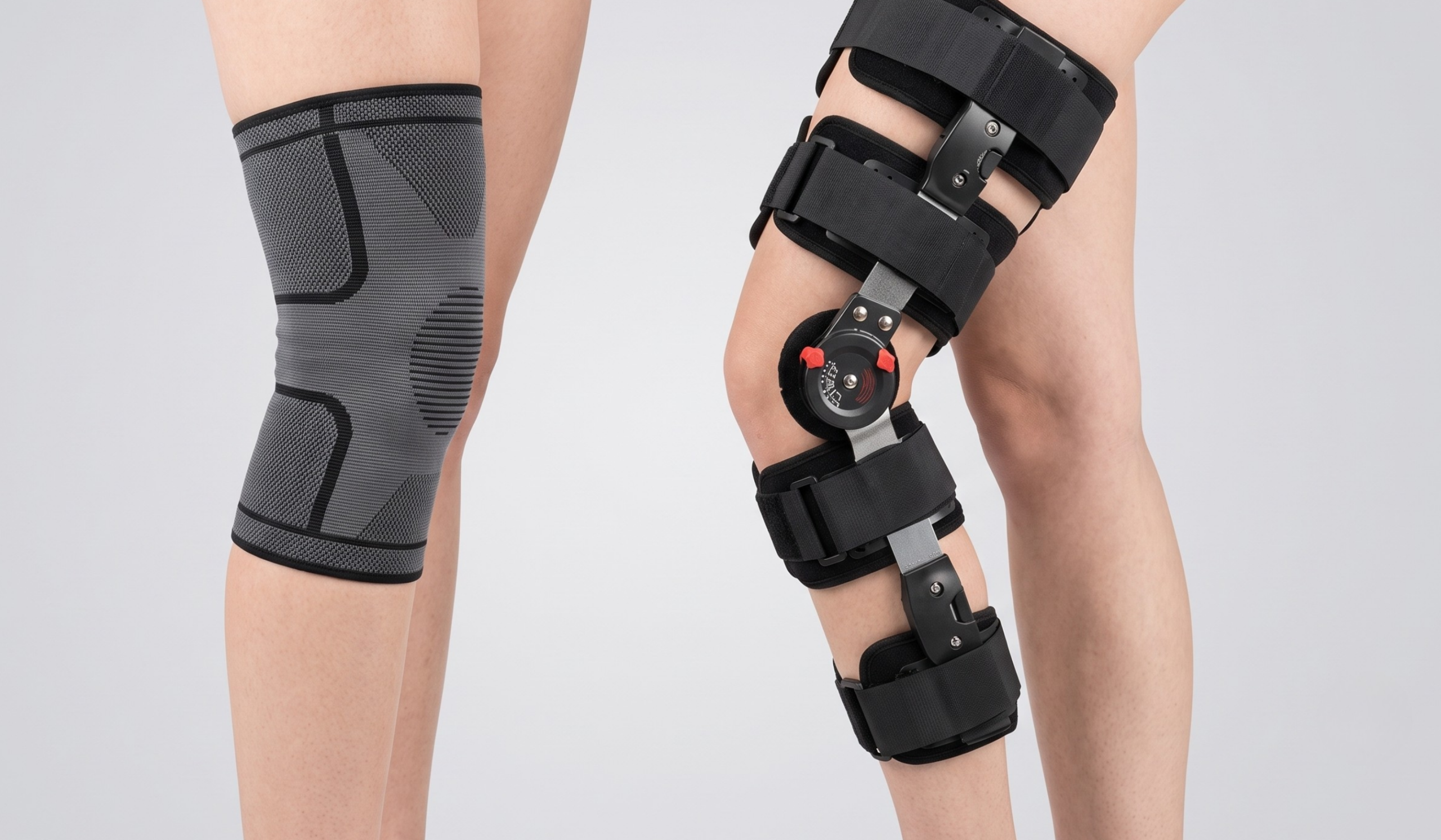
A knee support is a soft, stretchy sleeve for everyday compression, warmth, and mild pain relief, worn for prevention or minor discomfort. A knee brace is a structured device, often hinged, with straps or a rigid frame, built to limit specific movements and protect the joint after injury or surgery. If you're managing an existing injury, instability, or arthritis, a brace is generally the better fit. If you want everyday protection or relief from minor aches, a support is usually enough.
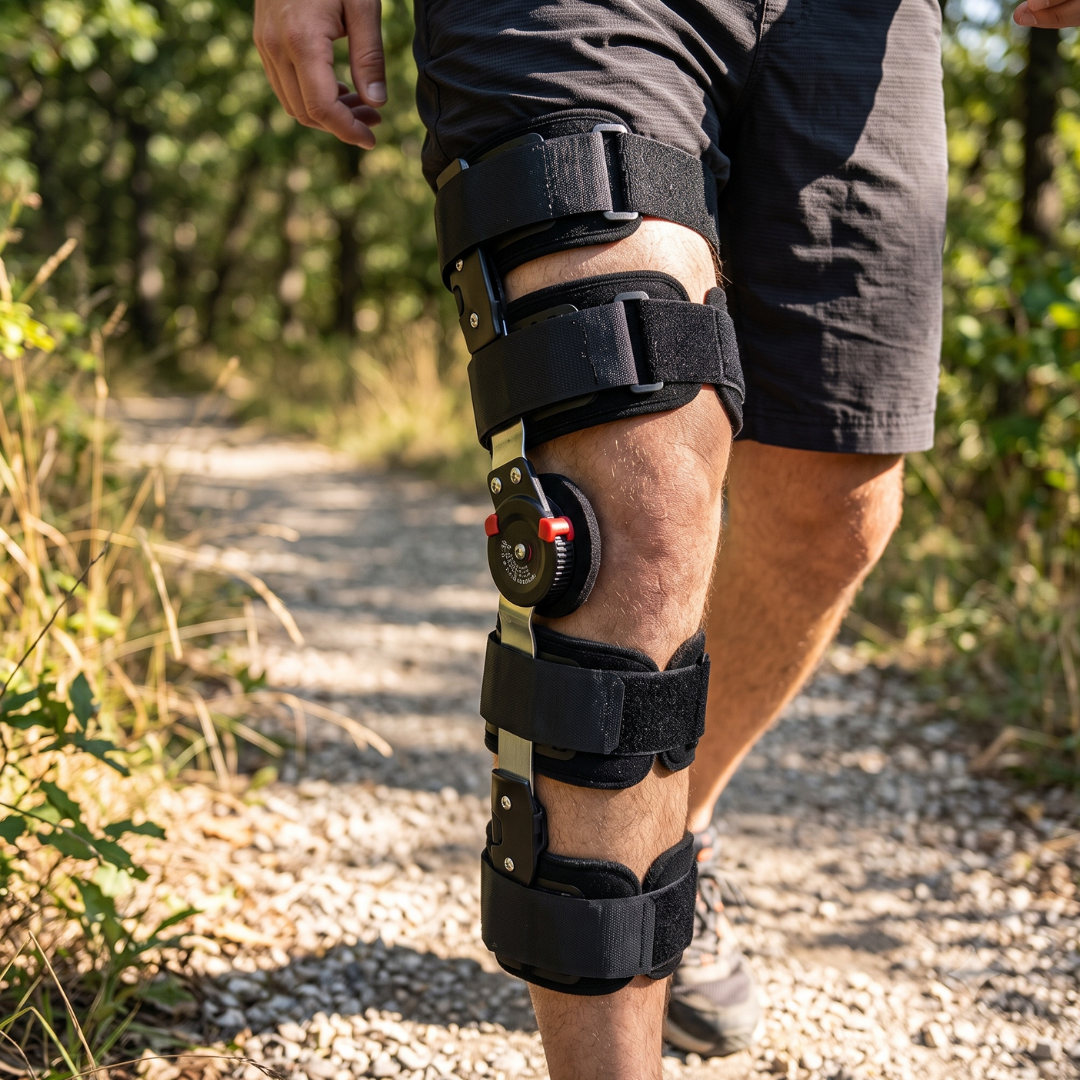
A hinged knee brace worn during everyday walking. The rigid side supports and straps are what set a brace apart from a soft compression sleeve, they limit specific movements rather than just compressing the joint.
What Is a Knee Support?
A knee support, sometimes called a knee sleeve, is a soft, elasticated garment that slips on over the knee. It works mainly through compression: gentle, even pressure around the joint that can help with swelling, muscle fatigue, and general stability during activity. Most people reach for a support for everyday prevention, mild arthritis discomfort, or extra confidence during exercise, not for a specific structural injury.
Supports are discreet enough to wear under clothing, easy to put on and take off, and don't restrict movement the way a rigid brace does. That flexibility is the trade-off: a support won't stop the knee from moving in ways that could aggravate a ligament injury.
What Is a Knee Brace?
A knee brace is built around structure rather than compression. Most braces use hinges on either side of the knee, adjustable straps, or in some cases a semi-rigid frame, specifically to limit how far the joint can move in certain directions. That control is what makes braces the go-to recommendation after ligament injuries, meniscus tears, or knee surgery, where the goal is protecting the joint while it heals rather than just supporting it.
Braces tend to be bulkier and more visible than supports, and they're usually recommended or fitted following guidance from a doctor, physiotherapist, or specialist, particularly for post-surgical or unloader braces used in arthritis management.
Knee Support
Flexible CompressionBest for everyday prevention and mild, non-mechanical discomfort.
- Compression fit and warmth
- Everyday injury prevention
- Slips on easily under clothes
Knee Brace
Structured SupportBest for injury recovery, instability, or post-surgical protection.
- Rigid or hinged structure
- Post-surgical recovery
- Fully adjustable straps
Knee Support vs Knee Brace: Comparison Table
| Knee Support | Knee Brace | |
|---|---|---|
| Main function | Compression, warmth, mild stability | Structural protection, movement control |
| Bäst för | Prevention, mild arthritis, everyday wear | Injury recovery, instability, post-surgery |
| Structure | Soft, elasticated fabric | Hinged, strapped, or rigid frame |
| Worn under clothing | Yes, easily | Usually not, bulkier fit |
| Typically recommended by | Self-selected for everyday use | Doctor or physiotherapist |
Ready to choose? Both options are a good fit, depending on your situation.
Quick Decision Guide
Goal: compression, warmth, and everyday confidence during activity.
Recommended: Support
Goal: limiting movement to protect the joint while it heals.
Recommended: Brace
Best for Arthritis
For arthritis specifically, the right choice depends on severity. Mild arthritis discomfort often responds well to a compression support worn during activity. Moderate to severe arthritis, particularly bone-on-bone or one-sided joint wear, usually calls for an unloader brace, a specific brace type designed to shift pressure away from the affected side of the joint. Our full guide, Knäortos vid artros: Riktlinjer från NHS och köpguide, covers this in detail, including when the NHS may be involved in your care.
Best for Sports
During sport, most people reach for a support rather than a brace, since a soft compression sleeve doesn't restrict movement the way a hinged brace does. Runners in particular tend to prefer a lightweight support unless they're managing a specific injury. See De bästa knästöden för löpning i Storbritannien 2026 for model-specific recommendations.
Best After Surgery
Post-surgical recovery is one of the clearest cases for a brace over a support. Following procedures like ACL or meniscus repair, a hinged brace is typically prescribed to protect the joint and control range of motion while it heals, often with settings that a physiotherapist adjusts over the following weeks. Always follow your surgeon's or physiotherapist's specific guidance on brace type and settings rather than choosing independently after surgery.
Sizing: Getting the Right Fit
Both supports and braces are sized by knee or thigh circumference, not by clothing size, so measuring is worth the extra two minutes:
- Measure around the mid-point of the kneecap with the leg slightly bent, using a soft tape measure.
- For hinged braces, also measure around the thigh, roughly 15cm above the kneecap, since braces are often sized by both measurements.
- Check the specific size chart on each product page rather than assuming sizing is consistent across brands or even across Broxtal's own range, since support and brace sizing scales differ.
- When between sizes, sizing up is usually safer for supports, sizing down is usually safer for braces with adjustable straps, since straps can be loosened but a frame that's too small won't fit at all.
Vanliga frågor
What is the difference between a knee brace and a knee support?
A knee support is a soft, elasticated sleeve providing compression and mild stability, best for prevention or minor discomfort. A knee brace is a structured device, often hinged, built to limit specific movements and protect the joint after injury or surgery.
What is the best NHS knee support?
The NHS doesn't typically recommend a specific branded product. If a support or brace is appropriate for your condition, it's usually recommended by a GP or physiotherapist as part of your treatment plan, with the specific type depending on your diagnosis rather than a single "best" option.
When should you not wear a knee support?
Avoid a soft support if you have a confirmed ligament tear, joint instability, or have just had surgery, these need the structural control of a brace, not compression alone. Also avoid wearing any support so tight it causes numbness, tingling, or swelling below the knee.
What is the difference between a knee support and a patella support?
A patella support is a specific type of knee support built around the kneecap, usually with a cut-out or gel ring, designed for patella tracking issues or kneecap-specific pain. A general knee support compresses the whole joint rather than targeting the kneecap specifically.
For further clinical guidance, refer to the NHS:s översikt över knäsmärta.
Still unsure which one fits your situation?
Kontakta Broxtal