
Yes, you can sleep with a portable oxygen concentrator, with a few conditions. Most people using oxygen therapy at home overnight need a continuous flow setting rather than pulse dose, since breathing gets shallower during sleep and pulse-dose sensors can miss those breaths. Beyond that, it comes down to noise level, battery reliability, and correct placement. Here's what actually matters for using oxygen therapy at home through the night.
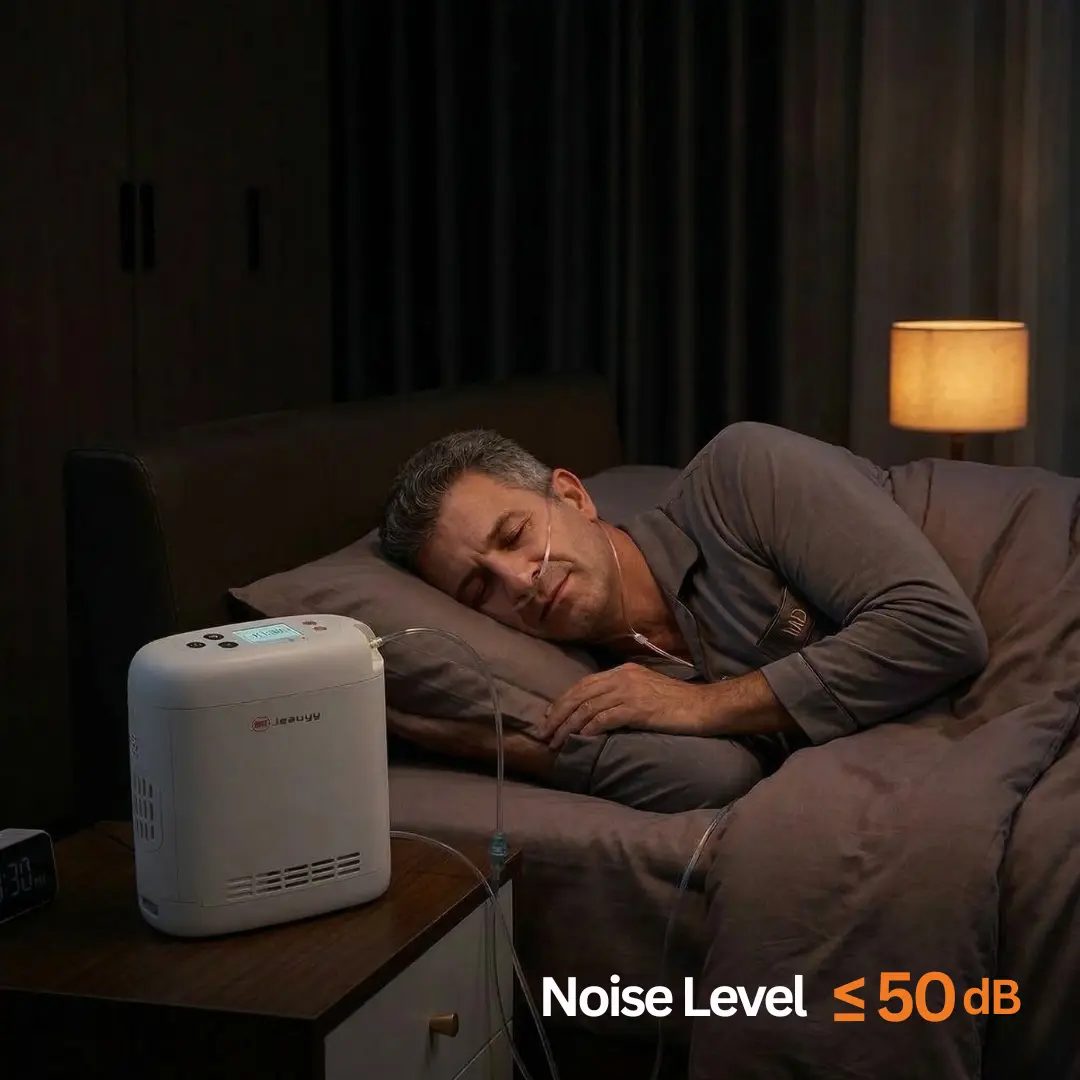
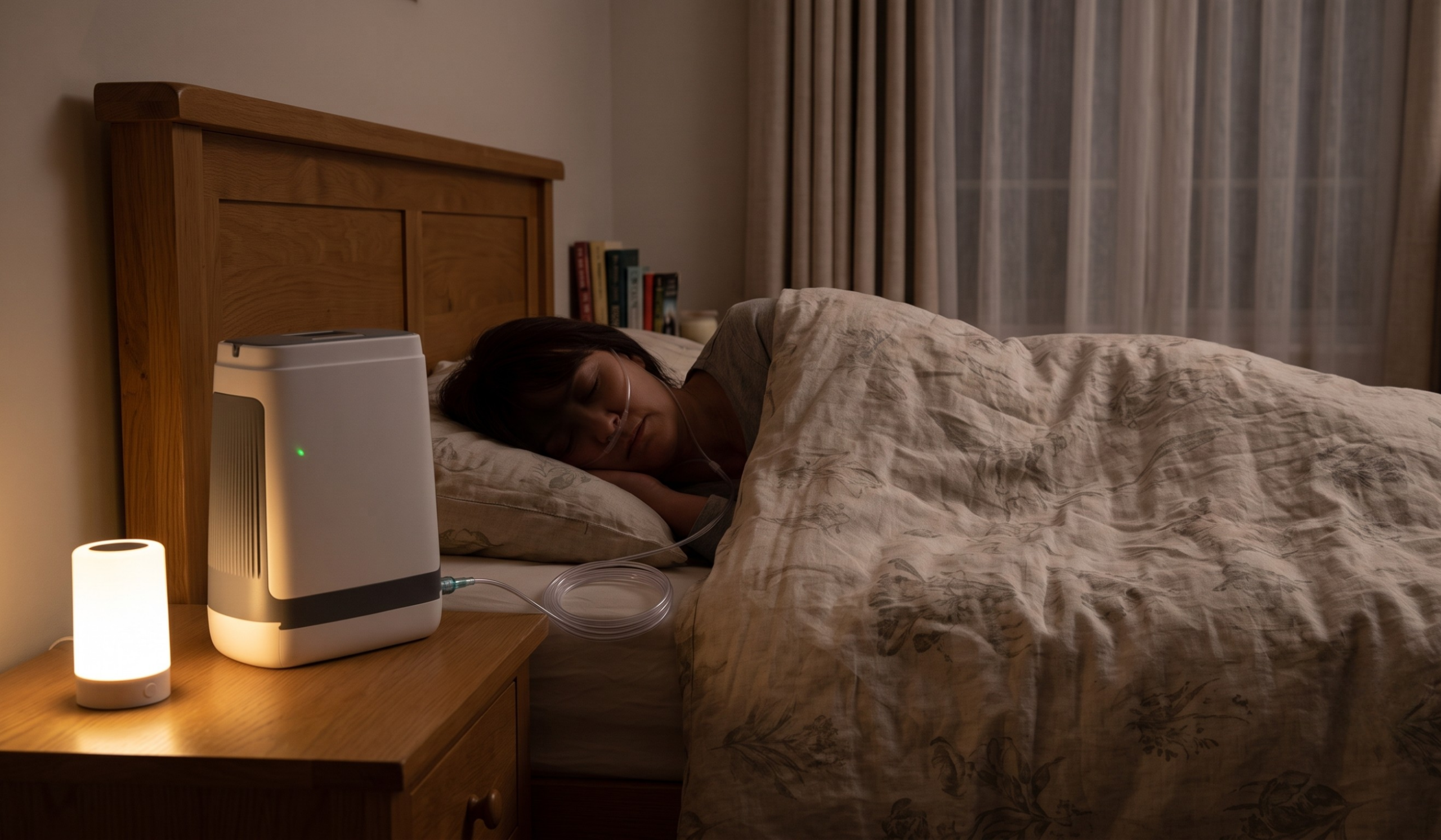
A portable oxygen concentrator placed securely on a bedside table, cannula tubing loose enough to move but not enough to tangle or pull free during the night.
Pulse Dose vs Continuous Flow: Which Is Safer for Sleep?
Portable oxygen concentrators deliver oxygen one of two ways. Pulse dose releases a burst of oxygen when it senses the start of an inhale, which works well while you're awake and breathing normally. Continuous flow delivers a steady stream regardless of your breathing pattern.
Overnight, breathing tends to get shallower and more irregular, especially during deeper sleep stages. A pulse-dose sensor tuned for daytime breathing can miss some of those shallower breaths, meaning you get less oxygen than intended right when you're least able to notice or correct it. This is why continuous flow is generally recommended for sleep, and why some people who use pulse dose during the day switch their device to a continuous setting, where the model supports it, before bed.
Not every portable concentrator offers a continuous flow mode. If sleeping with the device is a regular part of your routine rather than an occasional need, check the flow type before buying rather than after.
Continuous Runtime: How Long Will It Last Through the Night?
Continuous flow uses more power than pulse dose, so battery runtime drops when you switch modes, sometimes significantly. A battery rated for several hours on pulse dose may only manage a fraction of that on continuous flow, and the exact drop-off varies by model and by the litre-per-minute setting you're using.
We can't give one universal runtime figure here, it depends on the specific unit and flow rate. Check the continuous flow runtime listed on the individual product page rather than the pulse-dose headline figure, which is usually the longer of the two.
For a full night's use without waking up to check a battery indicator, a mains-powered home concentrator removes the runtime question entirely, since it isn't relying on a battery at all. If you only need oxygen at night and don't need to carry the device around during the day, that's often the simpler and cheaper option. Our Portable vs Home Oxygen Concentrator guide covers which setup fits which situation.
Comparing continuous flow models for overnight use?
Browse Oxygen ConcentratorsOvernight Safety Tips
A few practical points make sleeping with a concentrator safer and more comfortable:
- Keep it away from open flames and flammable products. No candles, oil-based skin products, or aerosols near the device or the oxygen outlet.
- Place it on a stable, flat surface within reach, not on soft bedding where airflow into the unit could be restricted.
- Check tubing length and fit before bed. Long enough to move naturally in your sleep, short enough not to tangle.
- Confirm your power source for the full night, whether that's a charged battery, a spare on hand, or a mains connection you won't accidentally disconnect.
- Follow your prescribed flow rate. Don't adjust it up or down from what a healthcare professional has set without checking with them first.
Setting Up for the Night, Step by Step
- Check the flow settingSwitch to continuous flow if your model supports it and your prescription calls for it.
- Position the unitSet it on a stable surface at or below bed height, close enough for the tubing to reach comfortably.
- Fit the cannulaAdjust the nasal cannula so it sits securely but isn't tight, and check the tubing runs clear of anything you could roll onto.
- Confirm the power sourcePlug into the mains for the night, or confirm the battery is fully charged with a backup nearby if needed.
- Do a final checkListen for the normal operating sound and confirm the display shows the correct flow rate before settling in.
Best Portable Oxygen Concentrators for Night Use
For overnight use specifically, continuous flow support and battery life matter more than weight. These are Broxtal's current options best suited to sleeping with the device:
| Modell | Price | Why it suits overnight use |
|---|---|---|
| Portable Oxygen Concentrator 5L, Continuous Mode | £849 – £1,088 | Purpose-built continuous flow, higher LPM for consistent overnight delivery |
| 7L Portable Oxygen Generating Machine (Jeamed P37A) | £729 – £819 | Adjustable output, higher-capacity for longer sessions |
| 1-8L Home Oxygen Concentrator (DGF) | £209 £469 | Mains-powered, no battery to manage overnight, lowest cost option |
Prices correct at time of writing and subject to change, especially where sale pricing applies. Always check the individual product page for current live pricing and confirm continuous flow specs before buying.
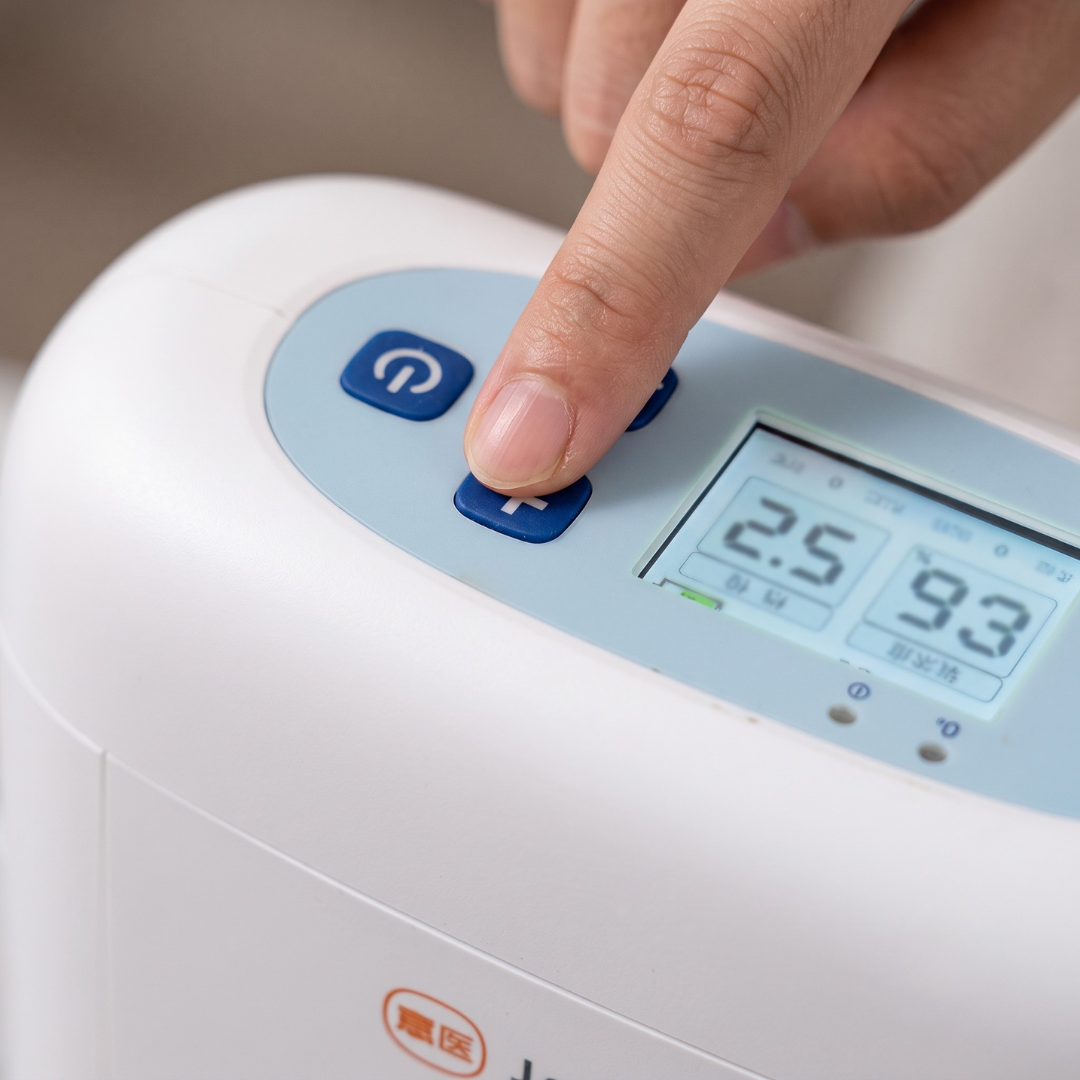
Checking the flow setting before bed takes a few seconds and makes the difference between steady overnight delivery and a pulse-dose sensor working against shallow, irregular breathing. The Jeauyy Rechargeable Oxygen Concentrator 1-5L is one of the models with a clear LCD display for exactly this kind of check.
Need help choosing between these for your situation?
Kontakta BroxtalVanliga frågor
Can you sleep with a portable oxygen concentrator?
Yes. Most people need to switch to a continuous flow setting for sleep rather than pulse dose, since shallow overnight breathing can be missed by a pulse-dose sensor.
Is pulse dose or continuous flow better for sleeping?
Continuous flow is generally recommended for sleep, since it delivers oxygen steadily regardless of breathing pattern. Pulse dose relies on detecting each inhale, which can be less reliable during deeper sleep.
How long will a portable oxygen concentrator last overnight on battery?
It depends on the model and the flow rate used, continuous flow drains the battery faster than pulse dose. Check the continuous flow runtime specifically on the product page, not the pulse-dose figure. A mains-powered home concentrator avoids the question entirely.
Is it safe to use an oxygen concentrator every night?
Yes, when used at the flow rate prescribed by a healthcare professional and with basic safety precautions, such as keeping it away from open flames and placing it on a stable surface.
For further clinical guidance on home oxygen therapy, refer to the Riktlinjer för syrgasbehandling i hemmet inom NHS.
Ready to find the right concentrator for your nights?
Shop All Oxygen Concentrators